Commercial Roofing Leads: How to Generate or Buy High-Value Leads

The 2026 Commercial Growth Playbook: Quality Over Quantity
How do I generate commercial roofing leads in 2026?
To generate high‑quality commercial roofing leads, use a multi‑channel strategy that targets decision‑makers like facility managers, property owners, and asset managers instead of broad consumer audiences. Combine targeted LinkedIn outreach and “digital door knocking” with high‑intent SEO content for terms such as “TPO roof repair,” “commercial roof replacement,” and “roof coating contractor” to attract serious prospects actively researching solutions. Avoid generic shared lead aggregators where you compete with several contractors at once; focus instead on exclusive territory marketing so you’re the only contractor pitching that property.
What is the cost per lead for commercial roofing?
Commercial roofing leads typically cost more than residential because each job can be worth tens or hundreds of thousands of dollars. It’s common for qualified commercial leads to fall in a range from low hundreds of dollars per lead, while cheaper shared leads may appear “bargain‑priced” but often convert poorly and drive up your true cost per acquisition. Exclusive, high‑intent leads require a higher upfront investment per lead but usually deliver a lower overall Customer Acquisition Cost (CAC) due to better close rates and higher average contract values.
How do I target facility managers for commercial roofing?
To reach facility managers and similar decision‑makers, use LinkedIn Sales Navigator to filter by job titles like “Facility Director,” “Property Manager,” “Asset Manager,” or “Operations Manager” within your service area. Pair this with account‑based marketing (ABM): build target account lists of industrial parks, logistics centers, schools, and office complexes, then serve ads and content specifically to employees at those companies so your brand is familiar before you ever make the first call.
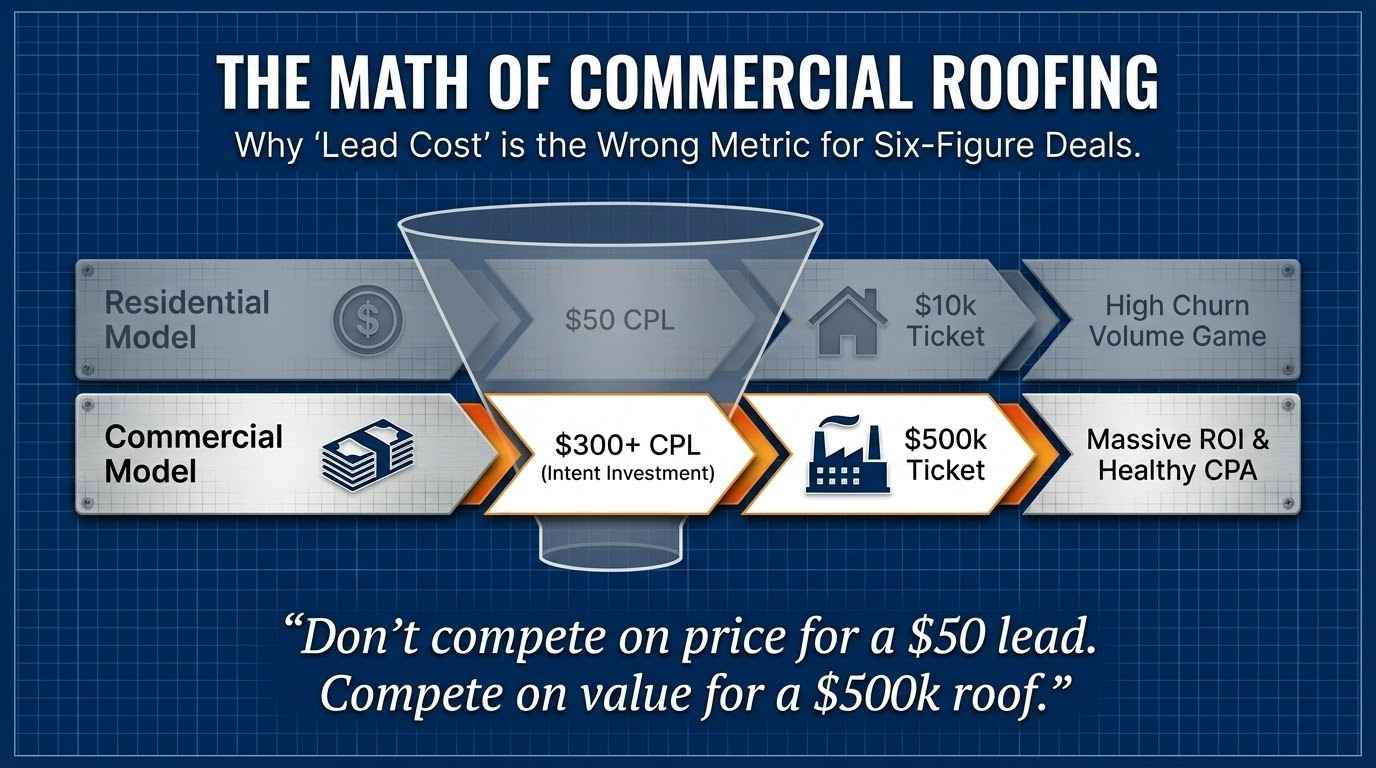
The Math of Commercial Roofing: Why “Lead Cost” Is the Wrong Metric
In residential roofing, a $50–$100 exclusive lead for a $10,000–$15,000 roof can be a great deal. In commercial roofing, where a single TPO overlay, coating, or replacement project can easily reach six or seven figures, focusing only on “cheap leads” is a strategic mistake. The goal is not the lowest Cost Per Lead (CPL); it’s a healthy Cost Per Acquisition (CPA) and high‑value relationships with decision‑makers who control meaningful budgets.
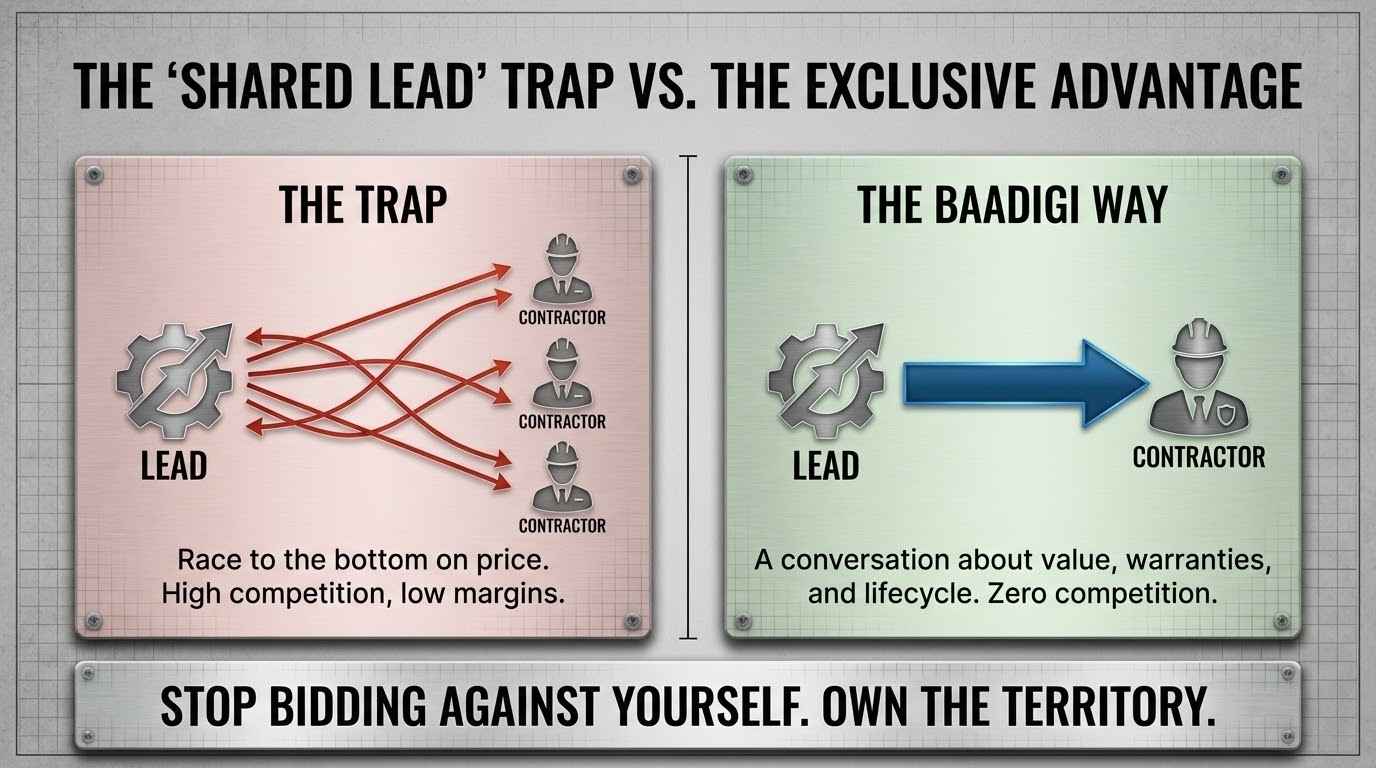
The Reality of Shared vs. Exclusive Commercial Leads
Shared leads (the trap):
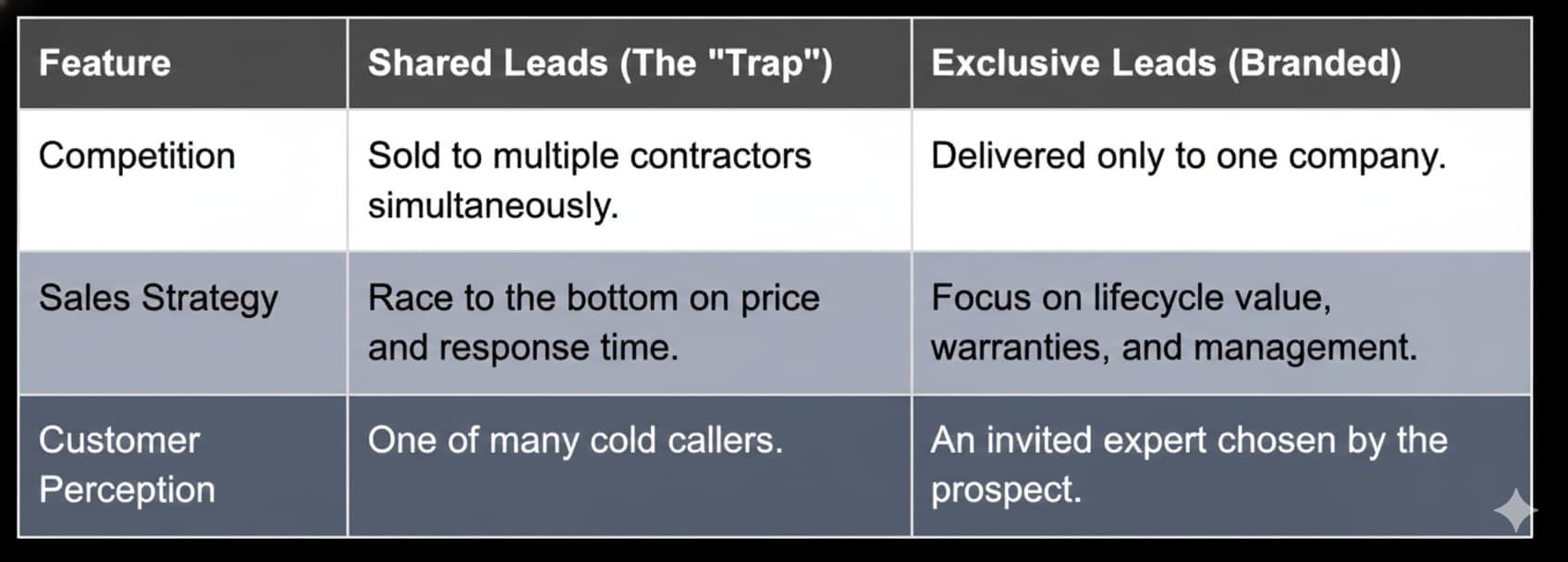
With shared leads, a provider sells the same contact to multiple commercial contractors at once, often at a lower price point per lead. On paper, they look affordable, but in practice you end up in a race to the bottom, competing on price and response time against several other bidders for the same building.
Exclusive leads (the Baadigi way):
Exclusive leads are generated through your own branded campaigns and delivered only to your company. That means you’re not one of four contractors cold‑calling the same facility manager—you’re the contractor they chose to contact, and you can sell on lifecycle value, warranties, and asset management instead of just being the cheapest quote.
3 High‑Level Strategies to Land Commercial Contracts
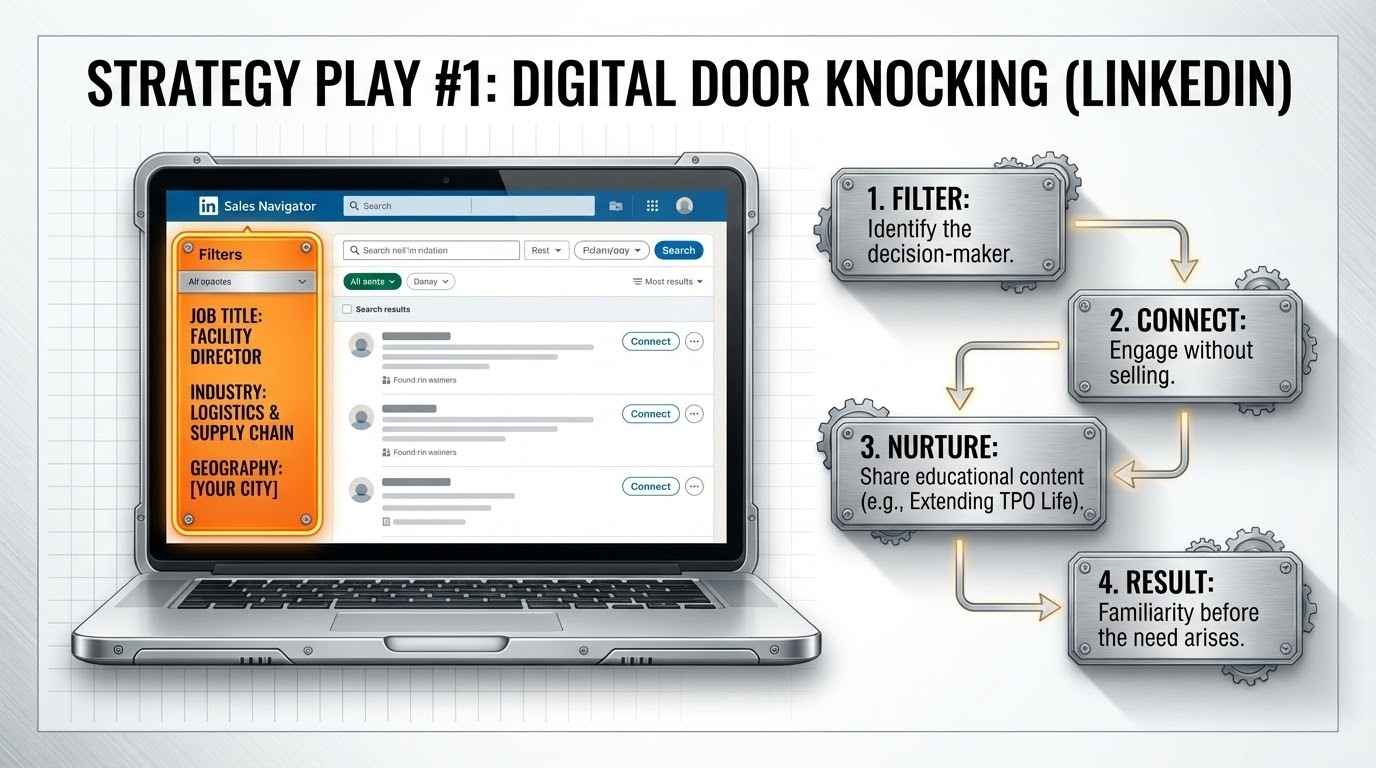
1. “Digital Door Knocking” via LinkedIn
Commercial roofing is fundamentally a B2B sale: your buyers are facility and property decision‑makers who live on email and LinkedIn, not in consumer Facebook groups.
- The tactic: Use LinkedIn Sales Navigator to build lists of facility managers, property managers, and asset managers in your target geography, then connect and engage with them over time.
- The play: Instead of pitching “free estimates” right away, share useful content such as “How to extend the life of a TPO roof” or “Tax advantages of roof restoration vs. full replacement,” positioning yourself as a long‑term advisor, not just an emergency repair vendor.
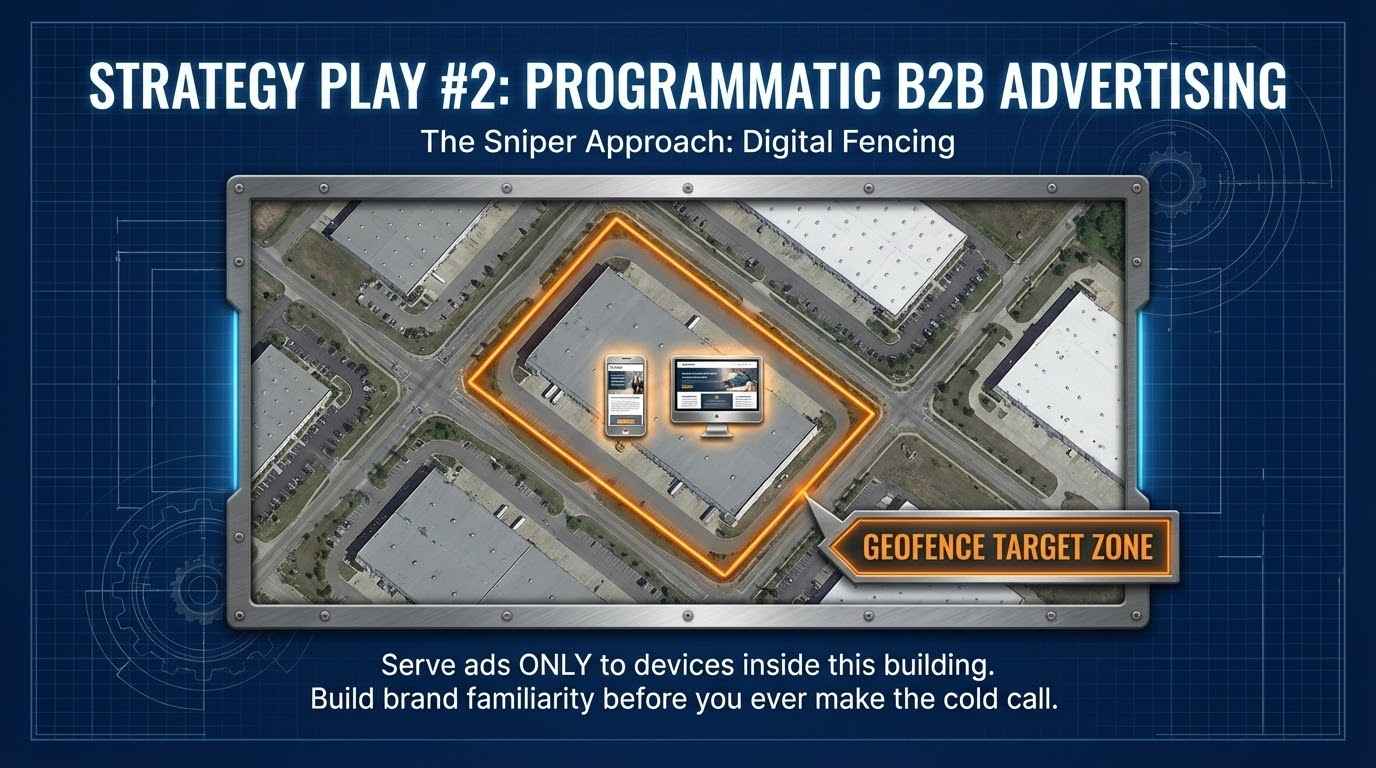
2. Programmatic B2B Advertising (The Sniper Approach)
Instead of targeting “everyone in [city],” modern programmatic platforms let you put a digital fence around specific industrial parks, logistics hubs, or office campuses.
- How it works: You define the buildings or parcels you want, and ads are served to devices used in those locations over time.
- The result: When the property manager or CFO at that site finally searches for “commercial roof repair” or “roof coating contractor,” they’ve already seen your name multiple times and are more likely to trust and contact you.
3. SEO for Technical Intent
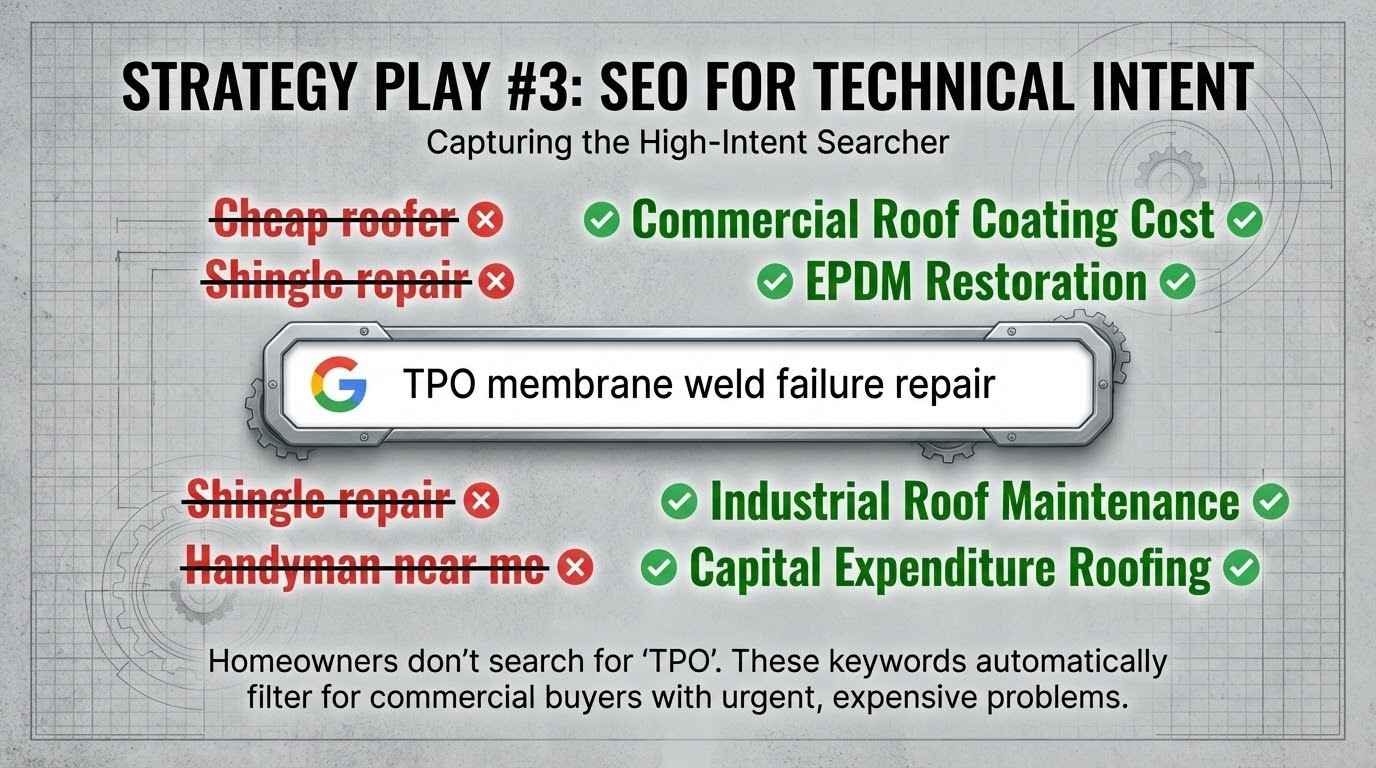
Commercial customers rarely search for “roofers” the way homeowners do. They search for technical issues and solutions.
- Target keywords: “TPO membrane repair,” “commercial roof coating cost,” “EPDM roof restoration,” “industrial roof maintenance plan,” “warehouse roof leak repair.”
- Why it matters: These terms naturally filter out homeowners and tire‑kickers; if someone is searching for “TPO weld failure” or “roof coating vs replacement for warehouse,” they likely manage or own a commercial property and have a real problem to solve.
Case Study: From Residential Churn to Commercial Focus
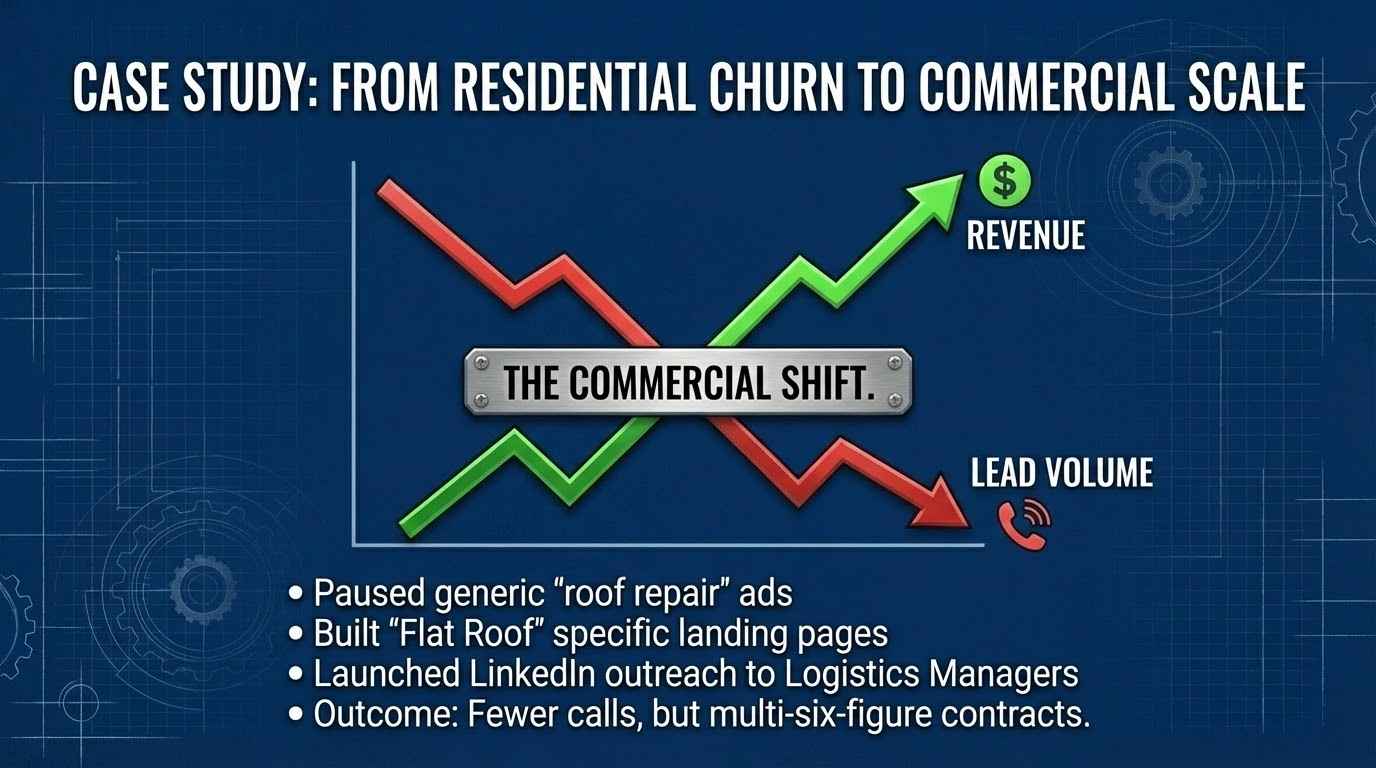
A roofing company in a major metro shifted from chasing residential price‑sensitive leads to targeting commercial flat roofs and coatings.
- Action: They paused broad “roof repair” campaigns, built a dedicated “Commercial & Flat Roof” landing experience, launched a LinkedIn outreach program to logistics managers, and created SEO content around “commercial roof maintenance [city]” and “roof coating contractor [city].”
- Result: Overall lead volume dropped, but average deal size and revenue grew significantly as they closed several warehouse and industrial contracts worth multiple six figures combined.
The lesson: fewer, higher‑quality commercial conversations can beat a large volume of low‑value residential leads when your sales process and pipeline are built for longer cycles.
Edge Case: The “Gatekeeper” Problem
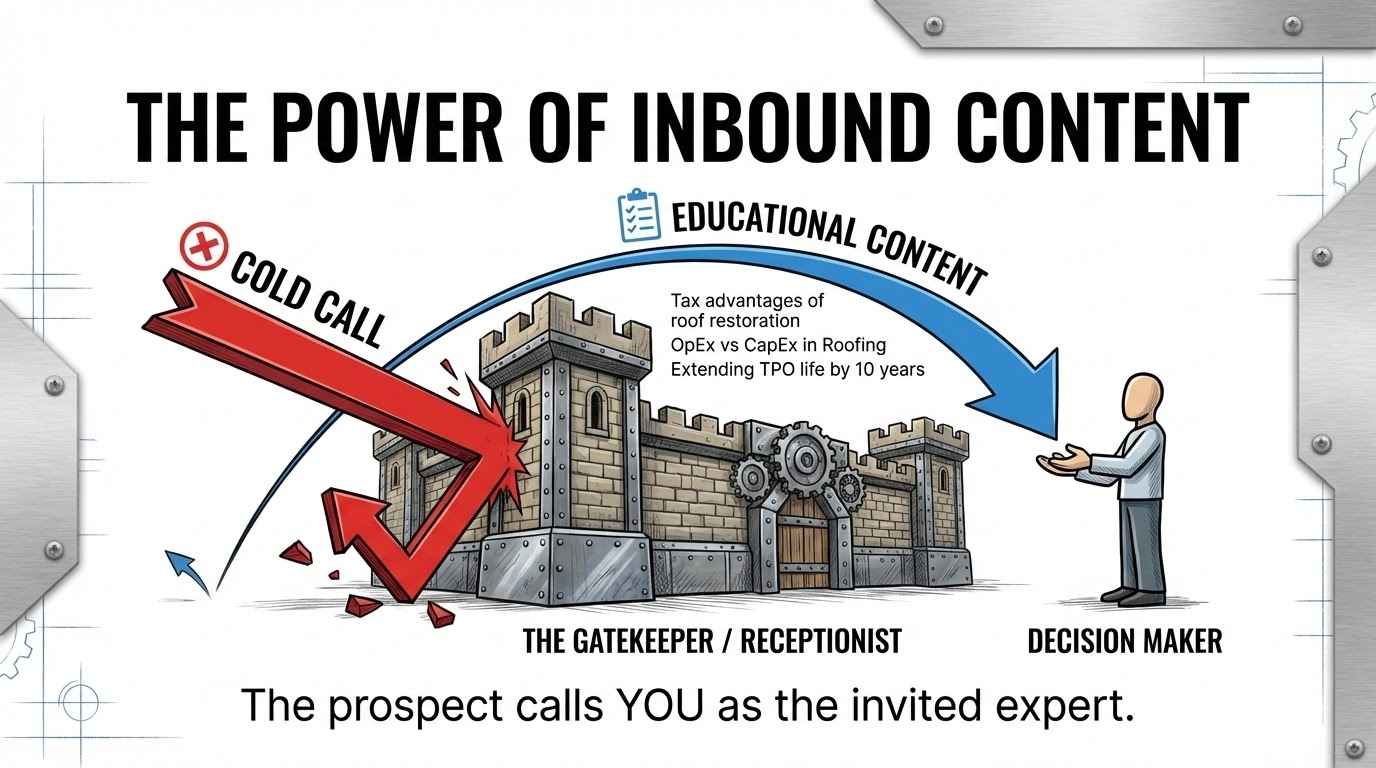
A common objection in commercial roofing is, “I can’t get past the receptionist or gatekeeper to the actual decision‑maker.” That’s exactly why inbound, education‑driven marketing is so powerful: when a facility manager finds you through SEO, LinkedIn content, or an exclusive campaign, they reach out directly. Instead of trying to cold‑call your way past a gatekeeper, you become the invited expert they call for a proposal.
High-Value Commercial Roofing Lead Generation
Generating high-value commercial roofing leads in the 2026 market requires a fundamental shift from high-volume residential tactics to a targeted B2B strategy. Unlike residential roofing, where success is often measured by low Cost Per Lead (CPL), commercial success depends on achieving a healthy Cost Per Acquisition (CPA) for contracts that frequently reach six or seven figures.
The most effective strategies prioritize exclusive leads over shared aggregators to avoid price-driven "races to the bottom." Key methodologies include "Digital Door Knocking" via LinkedIn Sales Navigator, programmatic B2B advertising to geofence specific industrial hubs, and technical SEO focused on high-intent terms like "TPO membrane repair" or "EPDM restoration." Commercial decision-makers—such as facility and property managers—respond best to positioning that emphasizes "Roof Asset Management" and long-term ROI rather than emergency repairs. This sector is characterized by longer sales cycles (3–12 months), requiring sustained nurture campaigns and an authoritative, education-driven market presence.
The Economics of Commercial vs. Residential Leads
A critical strategic error in commercial roofing is applying residential metrics to B2B acquisitions. The document highlights a significant divergence in the "math" of lead generation:
- Metric Shift: While a 50–100 exclusive lead is suitable for a $15,000 residential job, commercial contractors must focus on the total contract value. A single TPO overlay or coating project can reach six or seven figures, justifying a higher upfront investment per lead.
- CPL vs. CPA: Low-cost, shared leads often result in a higher true Cost Per Acquisition due to poor conversion rates and heavy competition. Exclusive leads, while more expensive initially, typically deliver a lower overall CPA by securing higher average contract values and better close rates.
Lead Quality Comparison
Navigating the Commercial Sales Cycle
Commercial roofing is defined by complexity and duration. Successful firms adapt their operations to accommodate these realities.
- Sales Cycle Duration: Deals typically take 3 to 12 months due to corporate budgeting, board approvals, and multiple stakeholder involvement.
- Nurture Requirements: Contractors must build "nurture campaigns," including email sequences, periodic site visits, and consistent check-ins to remain top-of-mind during the decision-making window.
- The Gatekeeper Problem: Cold-calling often fails because of administrative gatekeepers. Inbound, education-driven marketing (SEO and LinkedIn content) bypasses this by prompting the decision-maker to reach out directly to the "expert."
Strategic Positioning and Niches
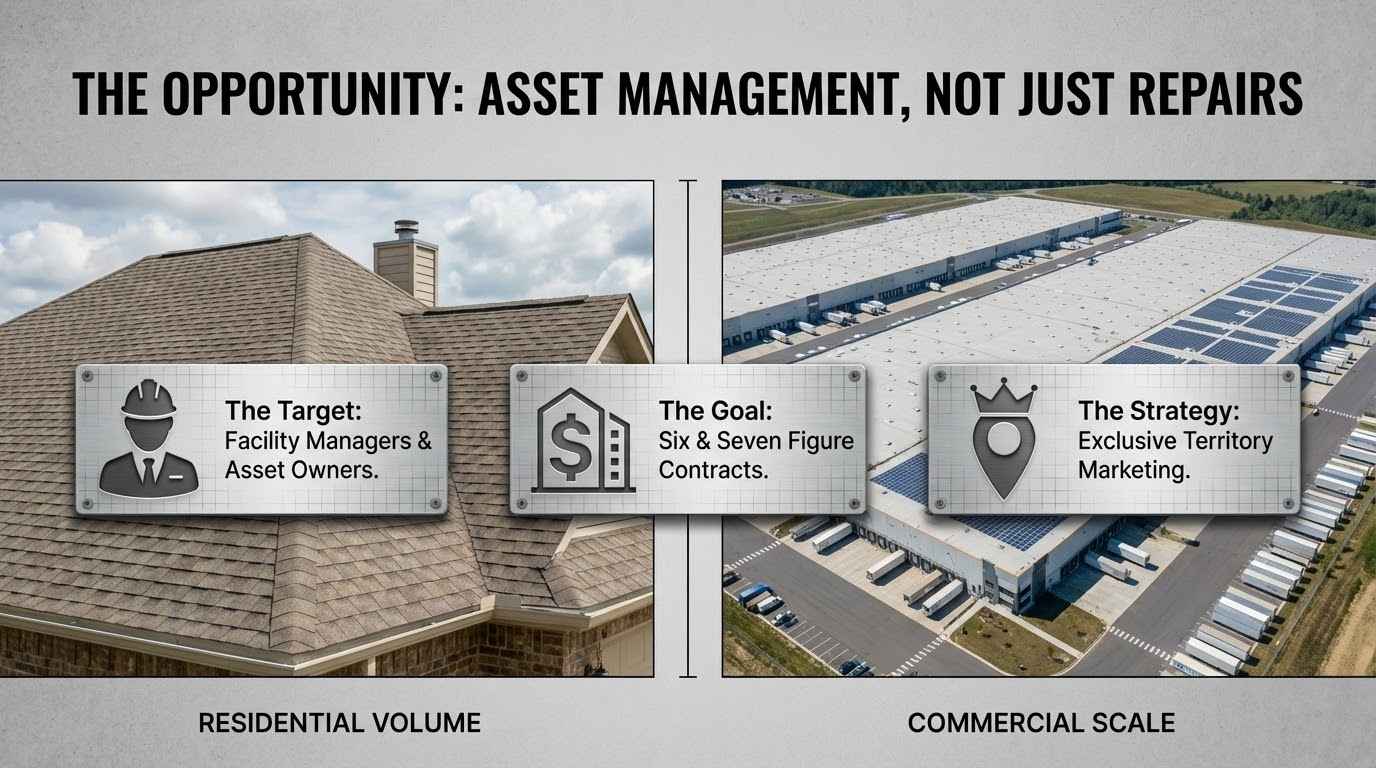
To differentiate in a crowded market, contractors should move away from selling "shingles and square footage" and toward professional asset management.
High-ROI Niche: Roof Coatings and Restoration
Roof coatings are identified as a high-ROI niche for both the contractor and the client.
- Client Benefit: Lower upfront cost, less building disruption, tax advantages, and energy savings.
- Contractor Benefit: Strong margins and an easier path to internal approval from facility managers.
Rebranding the Service Offer
Positioning offers as "Roof Asset Management Plans" rather than one-off replacements appeals to the decision-maker's focus on:
- ROI and asset performance.
- Depreciation and tax benefits.
- Risk mitigation and downtime reduction.
- Regulatory compliance.
The "One Client Per Territory" Model
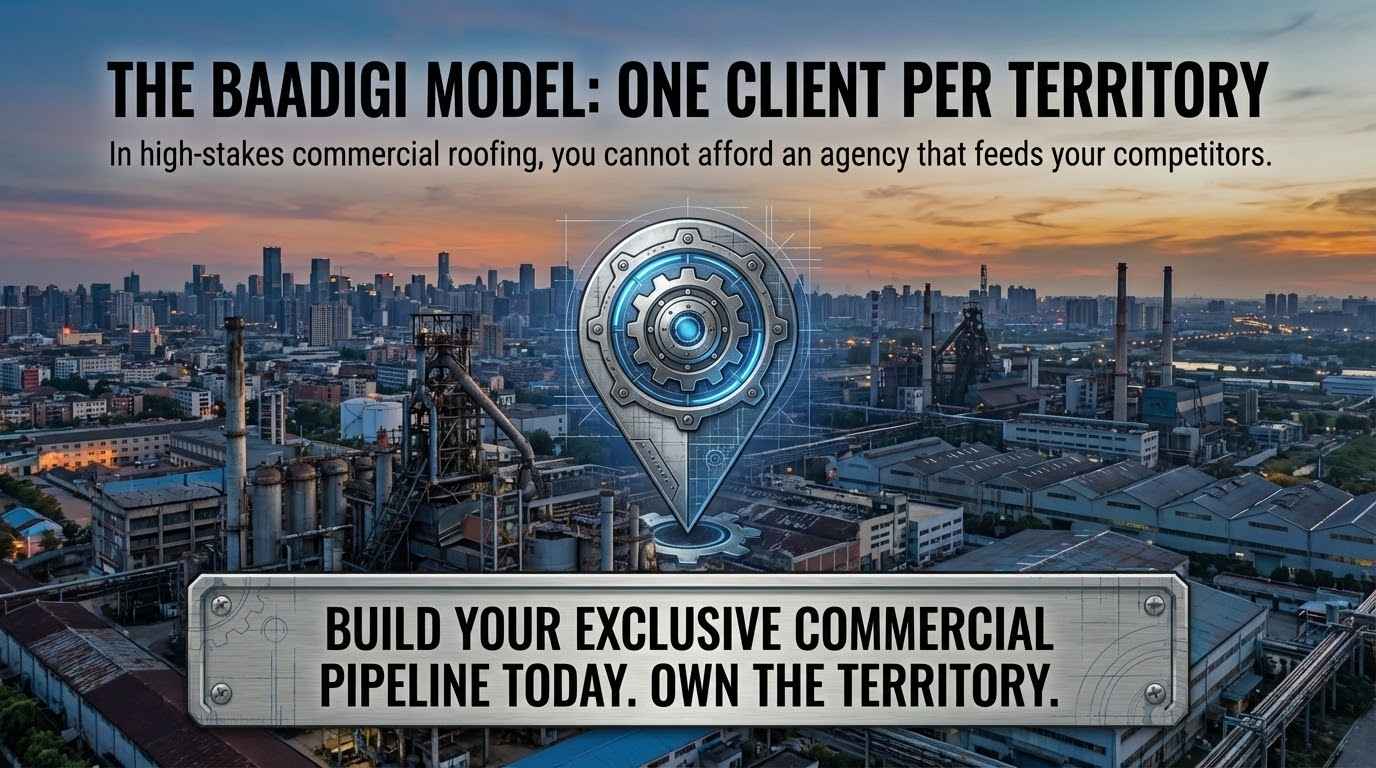
In the commercial sector, the exclusivity of the marketing partner is paramount. Because a single project can be worth millions, having a marketing agency that feeds leads to competitors in the same territory creates unnecessary bidding wars. Exclusive territory models ensure that all demand generated by branded campaigns is captured by a single entity.
National FAQs
Is buying a list of commercial property managers a good idea?
Generally, buying raw lists and cold‑blasting them with emails or calls is risky and often inefficient, leading to spam complaints, low engagement, and potential deliverability issues. A better approach is to use carefully sourced data to build matched audiences on platforms like LinkedIn or programmatic networks, warm those accounts with useful content, and then perform targeted, compliant outreach.
How long is the sales cycle for commercial roofing leads?
Commercial roofing sales cycles are typically much longer than residential; it’s common for deals to take several months due to budgeting, board approvals, and multiple stakeholders. You should be prepared for 3–12‑month cycles in many markets and build nurture campaigns—email sequences, check‑ins, and periodic site visits—to stay top‑of‑mind while decisions are made.
What is the best commercial roofing niche for leads?
Roof coatings and restoration are often among the highest‑ROI commercial niches because they offer building owners a lower upfront cost and less disruption than full replacement while still delivering strong margins for contractors. Framing coatings and restorations around lifecycle cost, energy savings, and tax advantages can make it easier for facility managers to get internal approval.
Do Google Local Services Ads (LSA) work for commercial?
Google LSA is primarily designed around local consumer services, so it often mixes residential and light commercial intent. If you focus heavily on commercial, you may need to aggressively dispute residential leads and lean more on traditional search PPC, SEO, and B2B channels for pure commercial deal flow.
How do I differentiate my commercial roofing business?
Commercial decision‑makers care about asset performance, risk, and long‑term cost of ownership more than just “shingles and square footage.” Position your offers as “Roof Asset Management Plans” or multi‑year maintenance and restoration strategies, and speak in terms of ROI, depreciation, downtime reduction, and compliance to stand out from contractors who only sell one‑off replacements.
Why is Baadigi’s “One Client Per Territory” model critical for commercial?
In commercial roofing, a single project can be worth hundreds of thousands or even millions of dollars, so you can’t afford to have your agency also feeding leads to your competitors. Baadigi’s one‑client‑per‑territory model ensures that the exclusive campaigns, content, and relationships we build in your market drive demand to you alone rather than fueling bidding wars between multiple clients in the same city.
Talk to an Expert in BaaDigi Today!
Transitioning from high-volume residential churn to high-margin commercial contracts requires more than just a change in equipment—it requires a total shift in your digital pipeline. By focusing on exclusive, authority-driven marketing, you bypass the bidding wars and speak directly to the decision-makers who control six-figure budgets. If you are ready to dominate your local market and secure long-term asset management contracts, explore our Complete 2026 Guide to Generating Exclusive, High-Quality Commercial and Residential Roofing Leads to start building your exclusive territory today.
Free website audit — see what's costing you leads
No email required. Takes 2 minutes. Completely free.

Ryan Goering
CEO & Founder, BaaDigi
U.S. military veteran and digital marketing strategist who built BaaDigi to help contractors generate predictable leads and revenue. 15+ years in SEO, PPC, and AI-powered marketing automation.
Popular Contractor Marketing Guides
Explore More Topics
Ready to Get More Leads?
Get a free marketing audit for your contracting business. We'll show you exactly where you're losing leads.
Get Your Free AuditRelated Articles
Exclusive vs Shared Remodeling Leads: Where Most Remodelers Quietly Bleed Profit
If you've ever been the fourth contractor to call a 'new lead,' you already know the problem. Here's why exclusive leads change everything.
Angi & Thumbtack Marketplace Leads vs Building Your Own Predictable Work Engine
Marketplace leads from Angi and Thumbtack feel easy — until you see the real cost. Here's why building your own engine wins long-term.
Electrician Lead Generation Guide [2026]
The complete guide to electrician lead generation in 2026. Google Ads, SEO, LSA, EV charger marketing, emergency vs planned — what actually fills your schedule.