


Support center (714) 707-2483
Writen by Ryan R Goering
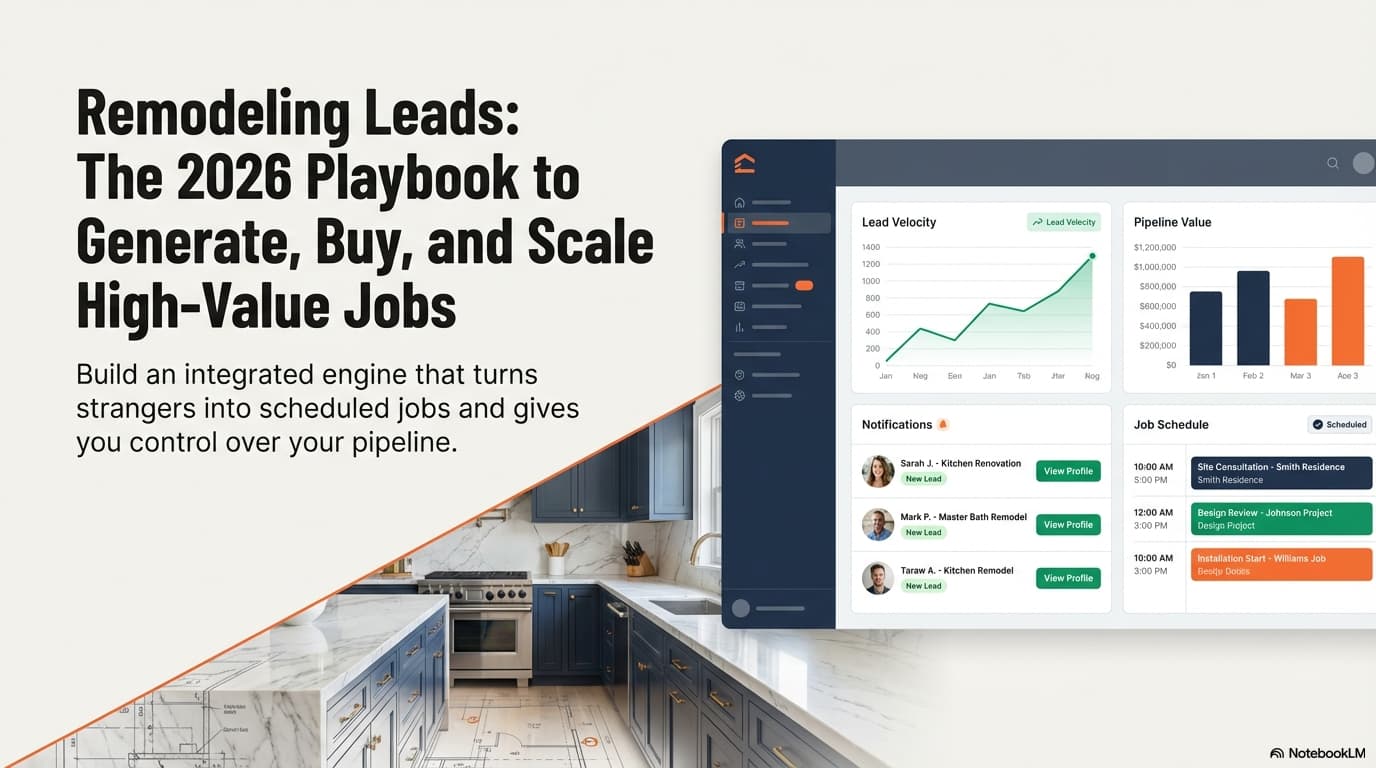
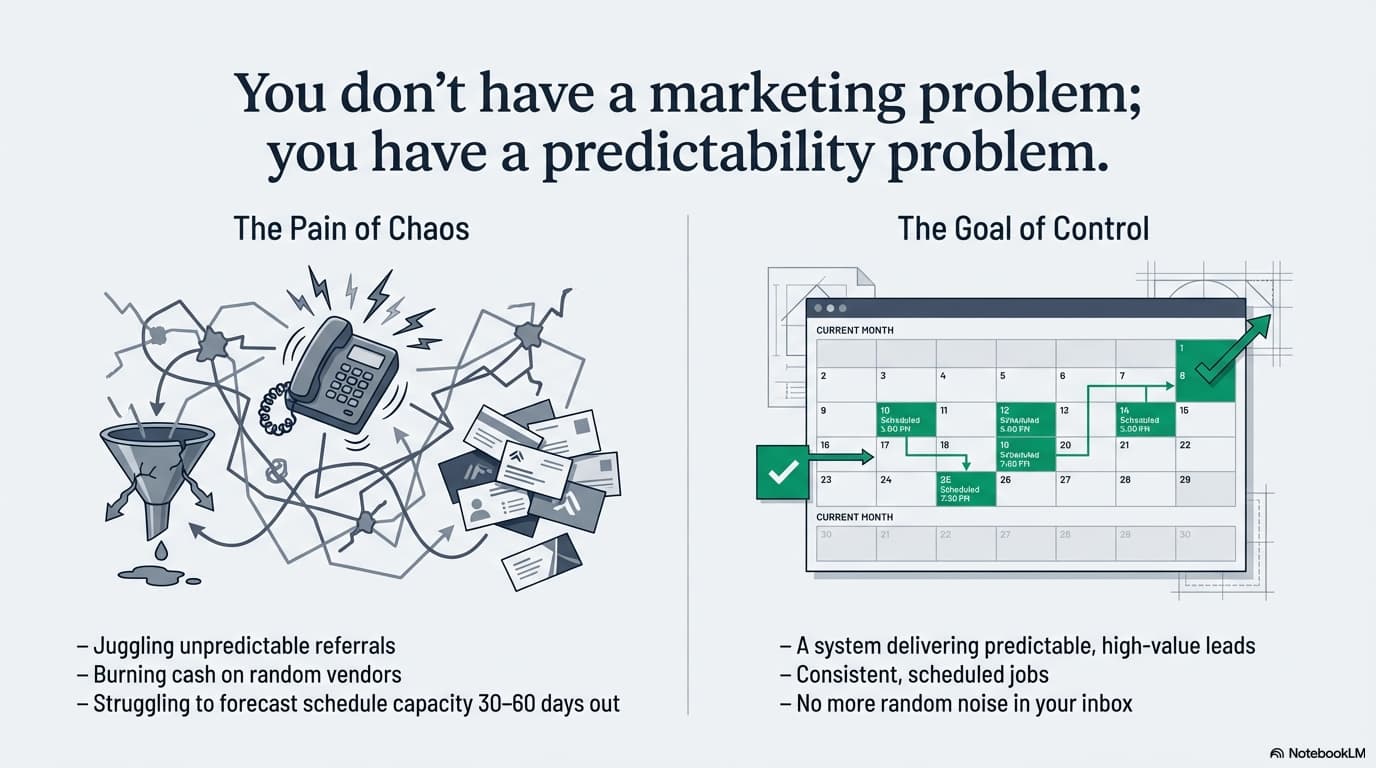
If you’re a remodeling contractor, you don’t actually have a “marketing” problem—you have a lead quality and predictability problem. You’re juggling referrals, random lead vendors, and DIY marketing, and you still don’t know how full your schedule will be 30–60 days from now. The goal of this guide is simple: show you how to build a system that delivers predictable, high-value remodeling leads, not just more noise in your inbox.
That’s exactly what BaaDigi’s Predictable Work Engine™ is built for: replacing piecemeal marketing tactics with one integrated engine that turns strangers into scheduled jobs and gives you control over your pipeline. As you read, think less “What tactic should I try next?” and more “How do I plug this into a system so it keeps working every month?”
At the most basic level, “remodeling leads” are homeowners who have raised their hand and said, “I’m interested in changing my home”—kitchens, bathrooms, basements, additions, whole-home renovations, and everything in between. But not all leads are created equal. Some are browsing Pinterest at midnight with no clear budget. Others are actively searching, comparing contractors, and ready to schedule a design consult this week.
You can think of remodeling leads in three broad buckets:
The fastest way to get burned is to treat all three buckets like they’re equal. Inbound, high-intent leads who found you by name or saw your content will almost always close at a higher rate—and with less price pressure—than anonymous shared leads from a marketplace. Marketplace leads can still have a place, but only if you see them as one channel feeding your overall system, not the foundation of your business.
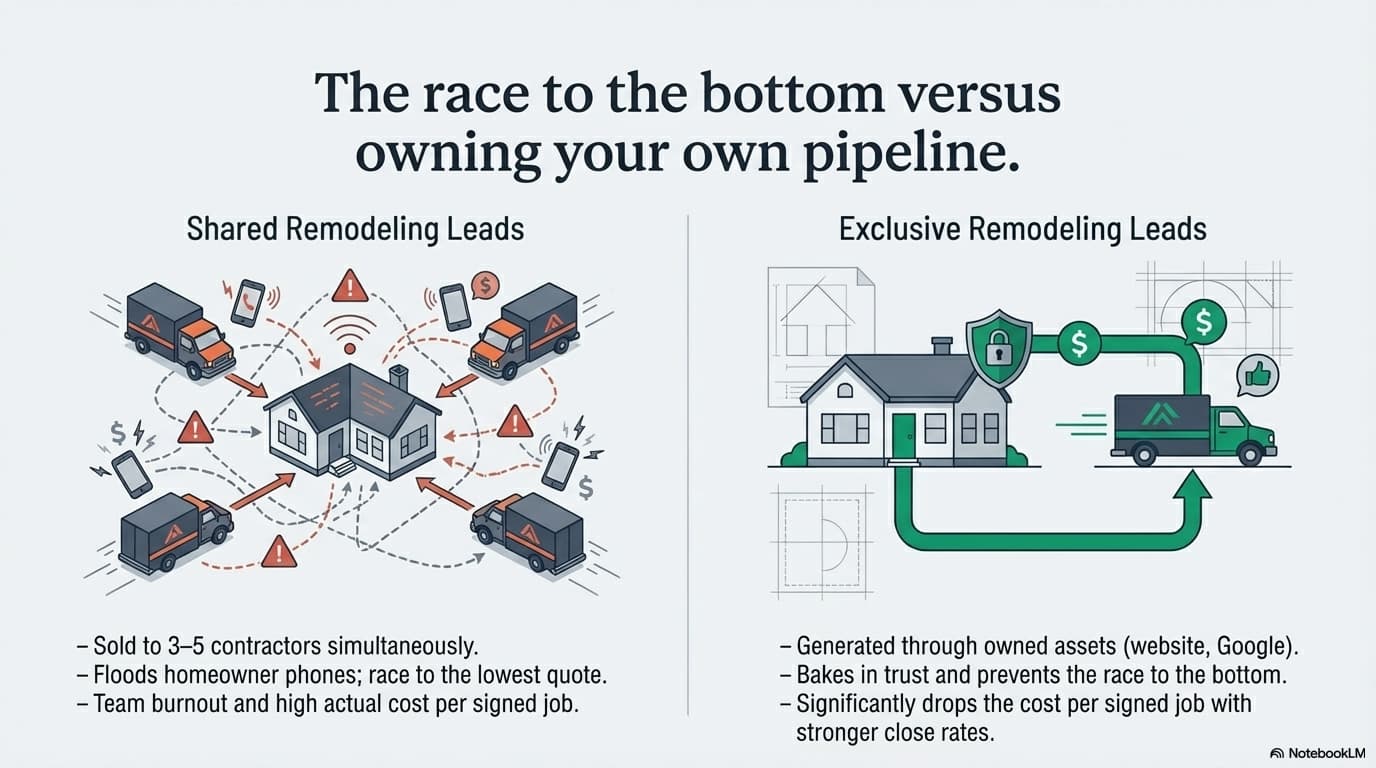
You’ve probably lived this: you buy a lead from a marketplace, call within a few minutes, and the homeowner says, “You’re the fourth person who called me today.” That’s the difference between exclusive and shared leads in the real world.
Shared remodeling leads
Exclusive remodeling leads
BaaDigi’s Predictable Work Engine™ is specifically built to produce exclusive, high-intent leads from your own assets—your website, SEO, Google properties, and automations—so you own the pipeline instead of renting leads from someone else’s platform. Shared leads might fill gaps, but your real leverage is in a system that consistently creates its own demand.
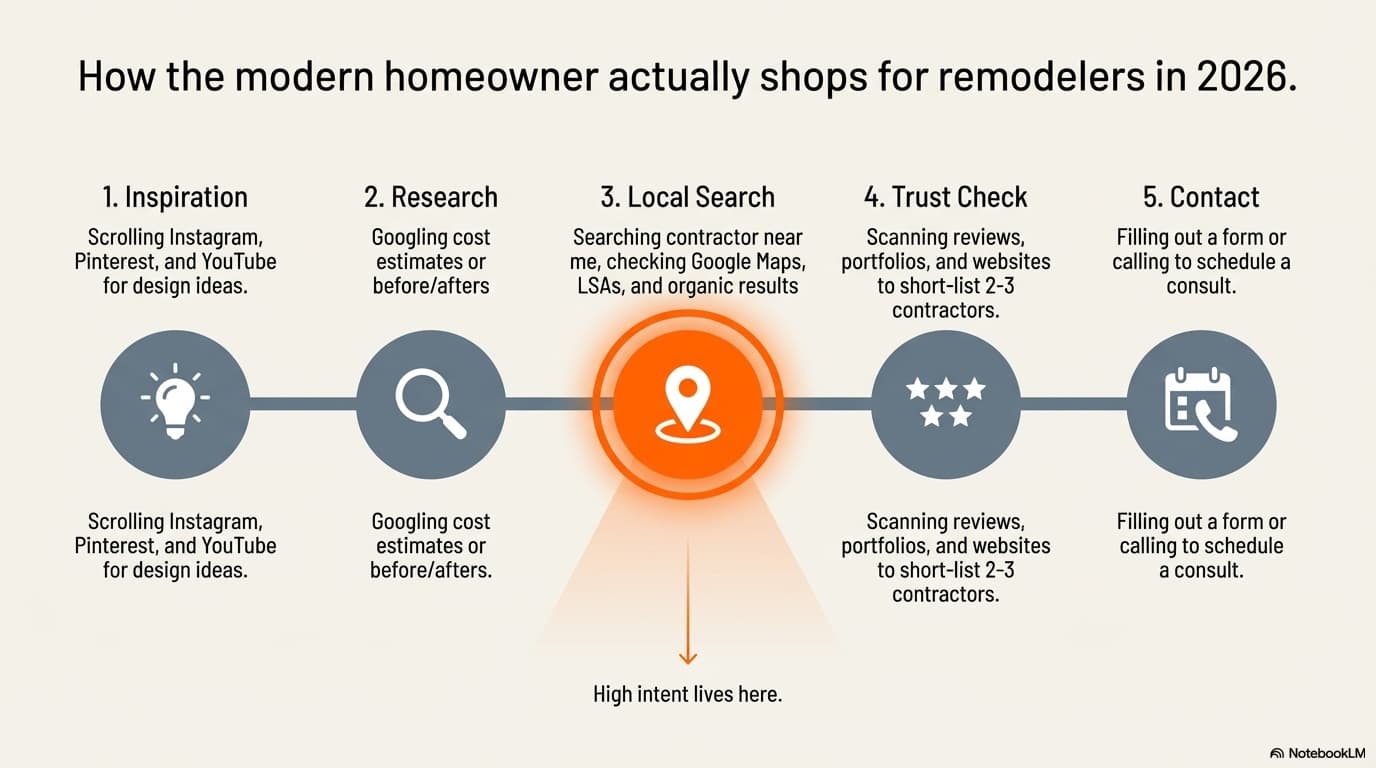
If you want more and better remodeling leads, you need to see the world like your homeowner does. Forget what vendors say and look at the actual journey.
Here’s a typical 2026 kitchen remodel path:
The big takeaway: most of the highest-intent remodeling leads start on Google—Search, Maps, LSAs—and then move through your website and social proof. Social media and marketplaces matter, but Google is where “thinking about it” turns into “I’m picking up the phone.”
A true Predictable Work Engine™ is designed around that journey: show up where they search, make it stupid-easy to contact you, follow up instantly, and track every step from click to contract.
Here’s the good news: you don’t need 50 tactics. You need a handful that you run well, inside a system that keeps them synced. These are the channels that are actually working for remodelers right now.
Your Google Business Profile (GBP) is probably your highest-intent, most under-optimized asset. When someone types “kitchen remodeler near me,” that map pack is prime real estate.
To turn GBP into a steady remodeling lead source:
Inside a Predictable Work Engine™, GBP isn’t an afterthought; it’s a core part of the Trust & Capture layer along with your website and social profiles, all tuned to drive calls and form fills instead of vanity impressions.
If you want remodeling leads who already know what they want and where they live, SEO is still one of the most powerful levers. The trick is to stop chasing vague keywords and build pages around specific services and locations.
Start with high-intent, remodeling-focused keywords like:
Then build:
A Predictable Work Engine™ stitches SEO together with paid traffic and automation so your content doesn’t just bring visitors—it feeds a conversion-focused website and follow-up system that actually turns visits into scheduled estimates.
Google Ads is still one of the cleanest ways to turn active search intent into remodeling leads fast—if you target the right keywords and send traffic to pages built to convert.
Focus on high-intent search terms like:
Best practices for remodelers:
In the Predictable Work Engine™, Google Ads is part of the Traffic layer, feeding a Conversion Terminal (your site) that’s built to push phone calls and form fills, with follow-up automation catching any leads your office misses in real time.
Where available for remodelers, Local Service Ads put you at the very top of the page with the “Google Guaranteed” badge. You pay per lead, not per click, and get phone calls or messages from homeowners who are usually closer to hiring.
To make LSAs work:
In a Predictable Work Engine™, LSAs become part of “Flow Stabilization,” where you can dial your lead flow up or down based on how booked your crews are, instead of panicking when work dries up.
Homeowners spend ridiculous amounts of time scrolling social media looking at home inspiration, especially for big-ticket remodels. Facebook and Instagram Ads give you a way to get in front of those people before they hit Google.
What works right now:
Social ads become more powerful when integrated with your other channels—retargeting website visitors, nurturing cold leads, and following up with email and SMS. BaaDigi’s Predictable Work Engine™ treats Facebook/Instagram as one spoke in a multi-channel system, not a standalone magic bullet.
Most contractors think they have a lead-generation problem when they actually have a lead-leakage problem. You don’t need double the leads if you’re losing half the ones you already get.
A basic nurture system can:
In one remodeling example, adding automated email sequences boosted lead-to-appointment rate from 25% to 60% and overall close rate from 10% to 35%. The Stability Engine module—part of BaaDigi’s Predictable Work Engine™—is dedicated specifically to fixing this: missed calls, slow responses, and dead databases.
Some of the best remodeling leads will never touch a lead marketplace. They’ll come from people your ideal clients already trust—interior designers, architects, real estate agents, high-end showrooms, and mortgage pros.
To turn partnerships into a consistent lead channel:
Inside a Predictable Work Engine™, recurring partner referrals become another feed into your system, tracked just like ads or SEO, so you can see which relationships actually drive revenue.
For bigger projects like additions and major remodels, you can sometimes target homeowners by watching building permits and sending them tailored outreach. It’s a bit more advanced, but it can work incredibly well in the right markets.
The play looks like this:
When these outbound touches feed into the same CRM and follow-up structure as your inbound leads, they stop being one-off experiments and become part of your Predictable Work Engine™.
You already know referrals close at the highest rate and with the least price pressure. The difference between “we get some referrals” and “we get referrals on purpose” is having a system.
A simple referral system might:
A Predictable Work Engine™ bakes these asks into your automation layer, so every project has multiple opportunities to generate reviews and referrals without you remembering it manually.
Lead gen platforms like Angi or Thumbtack can still play a role—as long as they’re not your only pipeline. They’re expensive, competitive, and often full of price-shoppers, but they can help you keep crews busy while your owned system ramps up.
If you’re going to use marketplaces:
BaaDigi’s whole thesis with the Predictable Work Engine™ is that you should use marketplaces strategically while building assets you own—SEO, content, LSAs, ads, CRM, and automation—that eventually reduce or eliminate your dependence on rented leads.
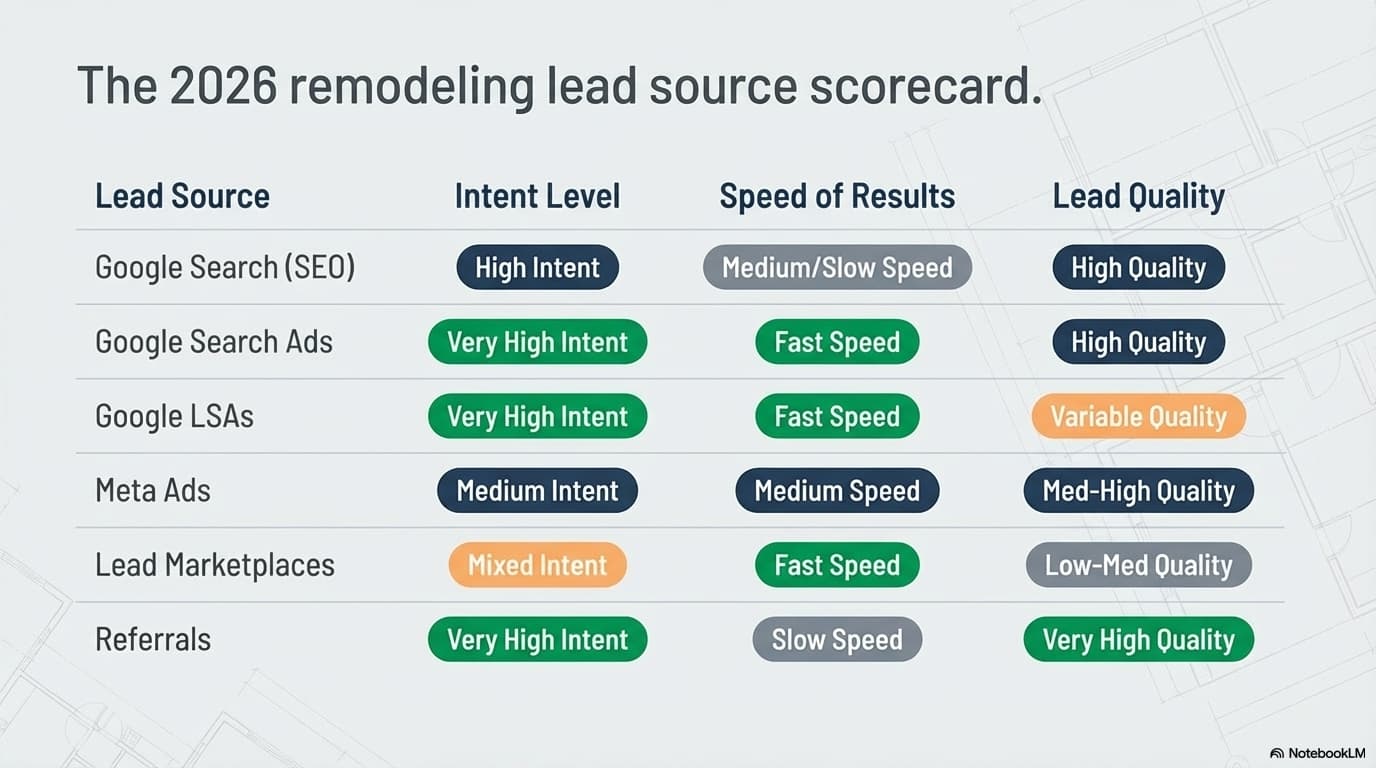
The Predictable Work Engine™ is essentially a way to combine the top four sources into one integrated machine, then squeeze more value out of every lead with automation and tracking.
SEO for remodelers in 2026 is less about stuffing keywords and more about being the most useful, trustworthy resource for local homeowners.
Skip generic “home improvement” phrases and go straight for what your buyers type:
When you map these out, you’ll see natural clusters. Each cluster becomes either a core service page, a city page, or a blog post. That’s exactly how the Predictable Work Engine™ approaches content: not random blogs, but structured clusters tied to real search behavior.
At minimum, a serious remodeling company should have:
Each page should:
You don’t need to overcomplicate it. Focus on:
The Predictable Work Engine™ pairs this with tracking so you can see which pages actually generate calls and leads—not just rankings—and then prioritize your efforts around what drives booked jobs.
Done right, paid ads are how you buy time while your SEO and referrals compound. Done wrong, they’re how you light money on fire.
For remodelers, a simple but effective structure is:
Non-negotiables:
A Predictable Work Engine™ then sends this data into a central dashboard so you can see exactly how your ad spend translates into jobs and adjust weekly instead of guessing.
LSAs can feel chaotic if you treat them like a black box. Instead:
Inside the Predictable Work Engine™, LSAs plug into the same call tracking and automation stack, so missed calls get instant text follow-up and prospects don’t slip through the cracks.
Social ads shine when you target bigger, more visual projects—luxury bathrooms, high-end kitchens, major additions. Use:
You’ll get the best ROI when your Meta campaigns are part of an engine that includes retargeting, email follow-up, and SMS reminders instead of living as “that thing the agency runs in a silo.”
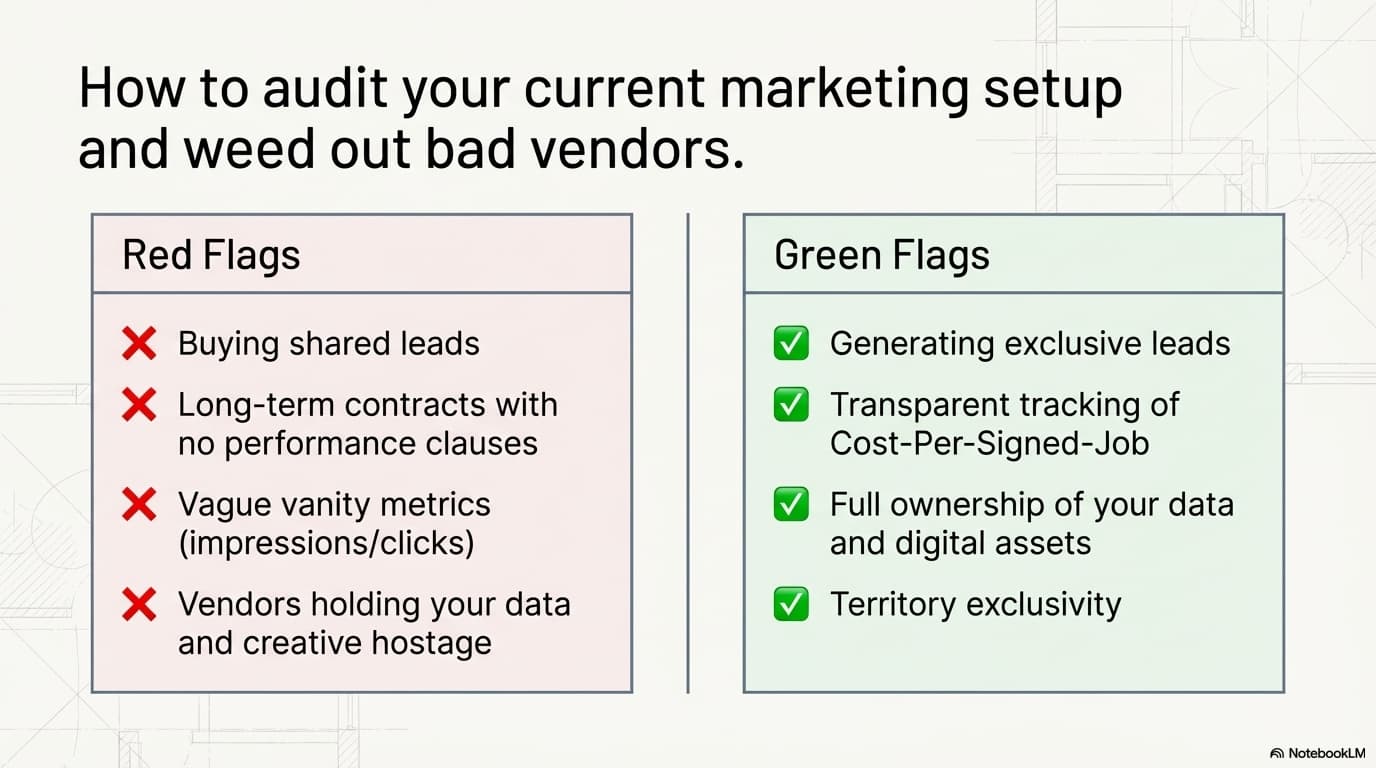
Most contractors have been burned by at least one “lead gen expert” or marketplace that over-promised and under-delivered. To avoid repeating that cycle, evaluate every vendor with three questions:
Red flags:
BaaDigi’s Predictable Work Engine™ was built specifically as the alternative to this vendor chaos: instead of buying isolated “services,” you install one system that integrates SEO, ads, website, CRM, and automation, with territory exclusivity and full ownership of your data and assets.
You can’t “out-lead-gen” a broken sales process. If you’re slow to respond, inconsistent with follow-up, or unclear in your process, even great leads will ghost you.
Key pieces of a solid conversion system:
The Stability Engine module of the Predictable Work Engine™ exists to fix exactly this: answering every call, following up every lead, and reactivating your existing database so you’re not constantly starting from zero.
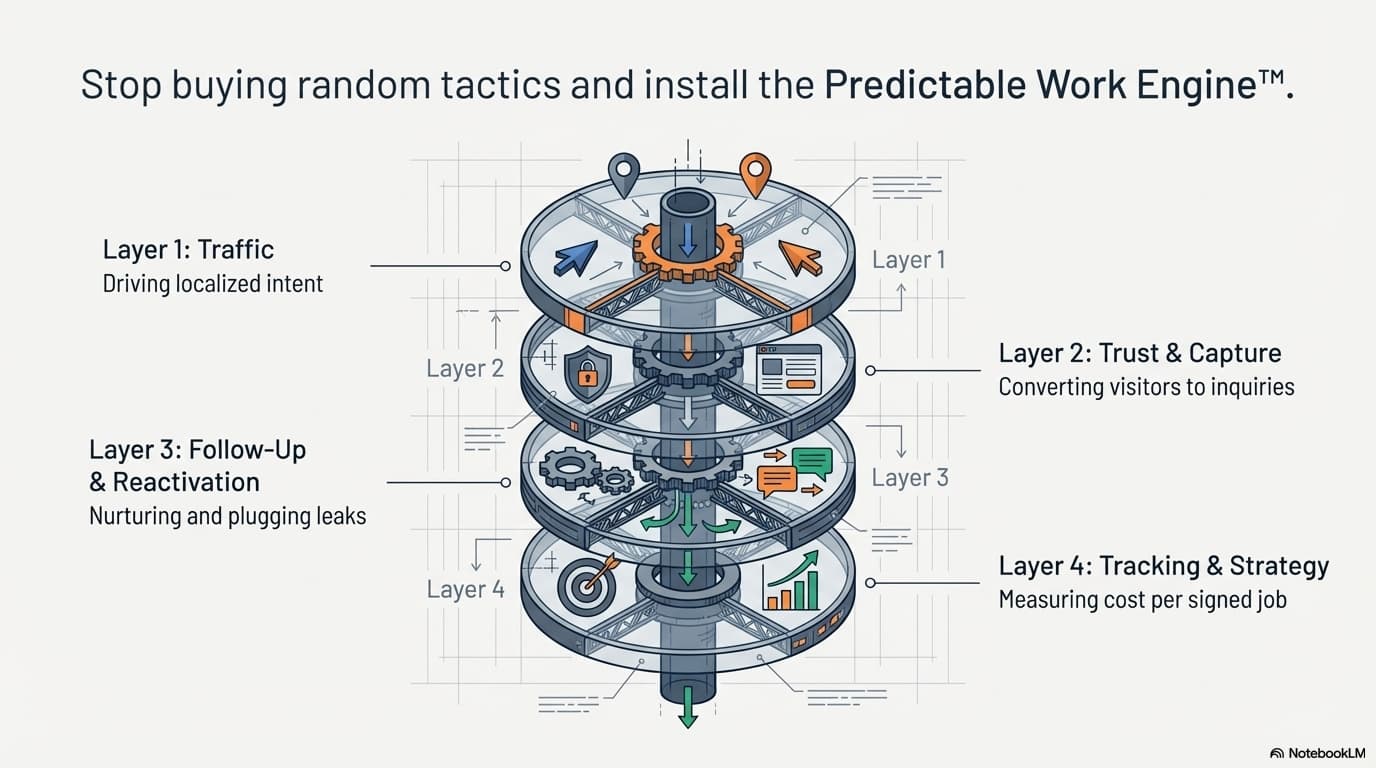
Let’s connect the dots. A real “remodeling leads system” isn’t Google Ads, or SEO, or Facebook. It’s how all of those pieces work together, week after week, without you manually babysitting every part.
A simplified Predictable Work Engine™ for a remodeler looks like this:
When those four layers are connected, you stop asking, “How do I get more remodeling leads?” and start asking, “How do I staff and schedule the work we can now predict 30–60 days out?”
If you’re tired of juggling random vendors, shared leads, and guesswork, you don’t need another “campaign”—you need a system. BaaDigi’s Predictable Work Engine™ is built specifically for residential contractors like you who want steady, profitable remodeling work instead of feast-or-famine seasons and vendor drama.
The next step is simple: audit your current funnel, find the leaks, and decide whether you want to keep renting leads from marketplaces—or own an engine that generates your own remodeling leads on demand. If you’re ready to see what a Predictable Work Engine™ looks like for your market, check if your territory is open and book a diagnostic.