Shared or Exclusive Roofing Leads?
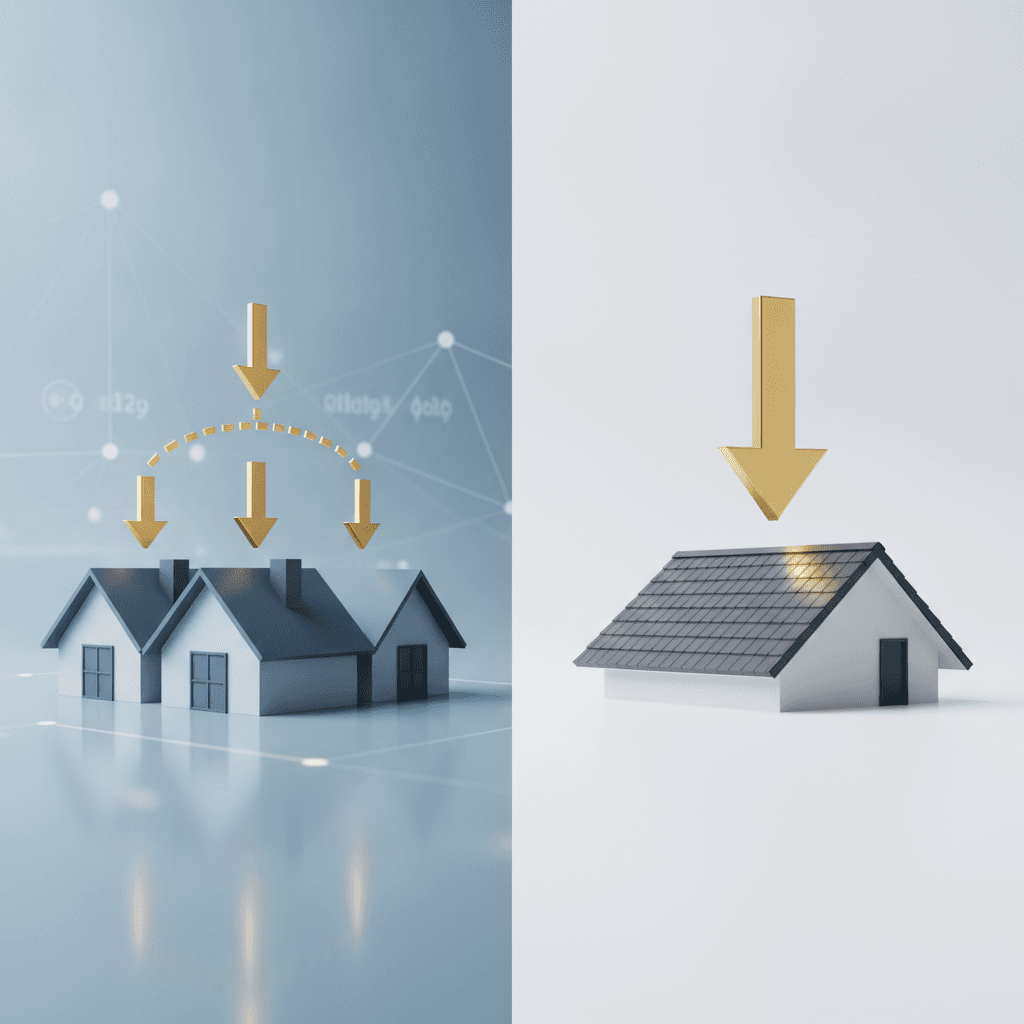
Are shared or exclusive roofing leads better?
Shared or exclusive roofing leads are not better by label; the charged cost per signed job decides. Shared leads go to several roofers under the plan terms, exclusive leads limit distribution, and the homeowner can still collect other bids either way. Compare each source against a known pay-per-lead figure: Google Local Services Ads on four BaaDigi client accounts cost $45.86 per charged lead across 900 leads (Jun–Sep 2026).
Is that a roofing benchmark?
No. Those four accounts are electrical, painting, paving and pool contractors. Use the figure as what a Google-billed lead costs in general, then hold every roofing lead vendor to the same arithmetic: charges after credits, divided by leads, then by signed jobs.
Can an AI agent actually use your website?
AI agents are starting to visit sites on a customer's behalf — comparing companies and requesting quotes. We run the same agentic browsing checks Google built into Chrome and show you what an agent hits when it lands on your site. No email to run it.
By Ryan Goering, founder and CEO of BaaDigi. BaaDigi sells contractor marketing services.
Last updated: September 2026.
The useful comparison is between two specific offers and your ability to serve their inquiries. A label does not supply the missing price, credit policy or sales evidence. Start with the roofing lead purchasing checklist if you have not yet obtained written terms.
What changes between the delivery models?
| Question | Shared | Exclusive |
|---|---|---|
| Who receives the introduction? | Multiple contractors may receive it under the plan | The provider limits distribution under the named agreement |
| Can the homeowner seek other bids? | Yes | Yes |
| What determines your charge? | The actual product and billing terms | The actual product and billing terms |
| Is a sale guaranteed? | No delivery label establishes that | No delivery label establishes that |
| What must you measure? | Suitable inquiries, handling, customers and full cost | The same outcomes using the same definitions |
Networx’s exclusive product description is one example of a provider-defined arrangement. It is not evidence that every shared inquiry reaches a fixed number of roofers or that every exclusive plan converts at a particular rate.
How do you make the comparison fair?
Compare similar requested work, territory and periods. A repair inquiry should not be judged against a replacement proposal simply because both involve a roof. Record any changes in office coverage, response handling, weather-related demand or pricing that make the groups different.
For each source, keep delivered introductions, suitable requests, reached prospects, inspections, estimates, customers and unresolved opportunities. Count a person’s repeated submissions carefully so they do not become multiple acquired customers. Save both original introductions when the same project appears through different providers.
Is your own website costing you leads?
Free scan — speed, mobile, local visibility, and lead capture. Results in about 30 seconds.
Which cost calculation should you use?
Net delivered-lead charges ÷ delivered leads measures the lead bill. Full attributable acquisition costs ÷ acquired customers measures a broader customer-acquisition cost. Define the period and included costs, deduct approved credits, and keep unused prepaid balances separate. If there are no acquired customers, report that condition instead of manufacturing a cost-per-customer number.
Credits are not a rounding error. Across the same 900 Local Services Ads leads on four BaaDigi client accounts (Jun–Sep 2026), Google billed 716 of them (79.6%); the rest were disputed, credited or declined. A vendor comparison that skips the credit step overstates the shared source and the exclusive source alike.
Then review project contribution after delivery costs. A lower customer-acquisition cost does not establish better profit if the resulting work differs materially. Use the full cost-per-customer guide for the accounting boundaries, and keep still-open estimates out of completed-win claims.
When might you keep, change or stop a source?
- Keep: The offer is clear, suitable inquiries arrive, handling works and completed outcomes support the expense.
- Change: A specific service category, territory or response problem can be corrected and tested within your cash limit.
- Stop increasing spend: You cannot explain charges, persistently receive unsuitable requests or cannot handle the work already arriving.
These are decision rules, not a ranking that makes one model the permanent winner. A profitable shared source can be useful; an exclusive source with poor fit can waste money. Neither outcome proves what another roofer will experience.
Can direct website leads remove competition?
A direct inquiry gives you a contact path through your own site, but the customer may still contact competitors. Include website, content, advertising, management and follow-up costs when evaluating it. Broaden useful acquisition routes through the roofing marketing plan without calling owned-channel inquiries free.
Editorial correction: Unsupported price bands, conversion multipliers and an unverified success story have been removed. This comparison does not claim to be a controlled study of roofing accounts.
What does BaaDigi charge instead of per-lead fees?
The Stability Engine is $497 per month plus $995 setup for the website, business profile, content, reporting and Google ads management it includes; ad spend is separate, with up to $1,600 per month of Google spend managed at this level. Compare that flat fee with a vendor’s per-lead charges only after you have signed-job records from both.
Free website audit — see what's costing you leads
No email required. Takes 2 minutes. Completely free.

Ryan Goering
CEO & Founder, BaaDigi
U.S. military veteran and digital marketing strategist who built BaaDigi to help contractors generate predictable leads and revenue. 15+ years in SEO, PPC, and AI-powered marketing automation.
Frequently Asked Questions
Are shared roofing leads always a bad investment?▼
No. A shared lead that fits your service and gets a fast reply can close; an exclusive lead outside your area cannot. Judge by your signed-job records.
Should exclusive leads have a higher close rate?▼
Not automatically. Exclusivity only limits how many contractors the provider sends the introduction to; it does not change whether the homeowner already called two other roofers, whether the request matches your services, or how fast your office answered. If you compare close rates between sources, write down what counts as a lead and a win, use the same reporting period for both, and keep open estimates out of the win column until they close. A small comparison can still be useful, as long as you do not credit the delivery model for a difference that response time or job type explains.
How do I handle a homeowner who appears in both sources?▼
Record each introduction with its date, source and charge, then link both to the one customer and project. Keep the evidence you would need for a duplicate-credit request under each provider’s terms. Count the sale once, pick one attribution rule, and note the overlap when you compare the two channels.
What if neither source has produced a sale yet?▼
Report delivered inquiries, charges, fit, contact outcomes and open estimates. Do not calculate a cost per customer from zero customers; report spend and zero wins. Check whether the sales cycle is still open or whether a handling or matching problem exists, and stop at the cash limit you set.
Popular Contractor Marketing Guides
PPC for Contractors by City
We serve contractors nationwide — based in Orange County, CA
Explore More Topics
Ready to Get More Leads?
Get a free marketing audit for your contracting business. We'll show you exactly where you're losing leads.
Get Your Free AuditRelated Articles
How Do You Log Into Houzz Pro?
How do you log into Houzz Pro? Use its official Sign In. For contractors needing account access. Recovery and billing stay with Houzz.
Contractor Lead Costs by Platform (2026)
Every major contractor lead platform, its billing model, and its reported cost in one table - with the close rates that turn a cheap lead into an expensive customer.
Google Local Services Ads vs Angi: Which Fits?
Compare Google Local Services Ads with the specific Angi product you would buy. Check eligibility, credit rules, spending exposure and customer outcomes.