How Does Omnichannel Lead Generation Work for Contractors?

How Do Contractor Lead Channels Connect?
Omnichannel lead generation for contractors means one customer record, one owner for the next action, and every channel judged by replies and signed work, not platform totals. The handoff is where it breaks: across 492 inbound conversations on six BaaDigi client accounts (Jun–Sep 2026), the median logged first reply was 3.2 minutes, but 4 in 10 never got a logged reply at all.
Start with the customer’s question rather than a list of platforms. Someone researching roof materials needs different information from someone seeking an urgent repair. A referral may need only confirmation of your service area and a clear contact route. Do not force every visitor through the same long form or treat every interaction as ready for an estimate.
Assign a purpose to each activity: being discovered, answering a question, demonstrating relevant work, capturing an inquiry, or following up on an existing opportunity. A channel can support more than one purpose, but its report should say which outcome you are evaluating. This makes it easier to identify a missing handoff rather than buying more exposure.
Can an AI agent actually use your website?
AI agents are starting to visit sites on a customer's behalf — comparing companies and requesting quotes. We run the same agentic browsing checks Google built into Chrome and show you what an agent hits when it lands on your site. No email to run it.
By Ryan Goering, founder and CEO of BaaDigi. Last updated: September 2026.
How should an inquiry move between channels?
Use one contact record with the original inquiry, known source information and current status. If a person submits a form and later calls, connect those interactions when you can verify they belong together. Keep uncertain matches separate until someone reviews them. Merging two different households can create a worse problem than counting a duplicate.
The next action needs an owner, a due time and an outcome. A notification sent to three people is not an assignment. Decide who accepts responsibility and who covers an absence. Your marketing report should be able to show whether the inquiry reached the office and whether anyone actually contacted the person.
Our own tracker shows why the owner matters. Of 492 inbound conversations across six client accounts (Jun 18 to Sep 21, 2026), 289 got a logged reply (58.7%). Of those answered, 64.0% were answered within 5 minutes and 90.7% within 24 hours. By first channel: SMS 51 of 56 answered, median 1.2 minutes; Facebook 46 of 51, 0.3 minutes; Instagram 11 of 19, 0.1 minutes; email 6 of 9, median about five days. The fast social and SMS medians are mostly auto-responders, and the phone data (one account) includes call-backs that were never logged, so a missing reply on a call is not proof nobody called back.
| Customer stage | Useful channel role | Record to preserve |
|---|---|---|
| Research | Service pages and relevant examples | Page or question associated with inquiry |
| Contact | Working phone, form or booking route | Original request and receipt time |
| Evaluation | Estimate explanation and permitted follow-up | Owner, open questions and next action |
| Decision | Clear approval or decline process | Outcome and attributable value |
Why should you avoid adding platform totals?
Different platforms can assign credit to the same customer. A homeowner might click a social ad, later search your name and then call after receiving an estimate reminder. That is one customer journey, not three sales. Google Analytics describes attribution as assigning credit across interactions; the selected model affects that allocation.
Use the marketing scorecard to reconcile records. Use your customer ledger for the count of actual customers and keep platform attribution as a separate view. Write down the reporting period, attribution settings and event definitions. When two reports disagree, investigate the definitions before concluding that one channel failed or an agency hid a lead.
Is your own website costing you leads?
Free scan — speed, mobile, local visibility, and lead capture. Results in about 30 seconds.
What should an HVAC follow-up sequence contain?
An HVAC workflow should distinguish a current service request from a future replacement conversation. As a planning example, an incoming inquiry could receive an accurate acknowledgement, be assigned to the appropriate office queue, and trigger a task for a person to confirm the service need. A message must not promise emergency availability unless the operation can provide it.
After contact, follow-up should reflect the actual status: appointment arranged, estimate outstanding, customer declined or request unresolved. Stop messages that no longer make sense. Do not keep sending a booking prompt after someone has booked. Check permissions and channel rules before sending automated communications; a previous interaction is not a universal permission slip.
Website forms follow office hours. Across 486 submissions on 28 client sites (Apr 28 to Sep 22, 2026), 66.9% arrived between 8am and 5pm Pacific and 17.7% landed on weekends. Plan after-hours coverage for the remaining third instead of assuming forms only arrive when someone is at a desk.
How do you reduce dependence on one source?
Keep a profitable source operating while you test the missing capability. If the website fails to explain your services, fix that before sending it more traffic. If estimates stall because no one owns follow-up, adding another ad channel may simply create a larger unanswered queue. The speed to lead guide shows how to measure that queue. The channel-dependence guide helps decide what to test next. Diversification is a business choice, not a requirement to be everywhere.
For organic work, connect the relevant SEO service to a clear service-page and inquiry plan. For paid campaigns, define a budget and a specific offer. Use the organic social guide for unpaid activity rather than treating organic posts and paid lead ads as the same task.
Which costs belong in the comparison?
Include media, management, website work, software and the staff effort needed to handle inquiries. Use the same cost boundary when comparing channels. A referral with no advertising bill still requires a useful intake and estimating process. A cheap lead can be expensive if the work is outside your scope or produces repeated wasted site visits.
Separate acquisition costs from the cost of delivering work, then examine whether enough contribution remains. Do not call revenue divided by spend a profit calculation. BaaDigi’s Stability Engine is $497 per month plus $995 setup, and it manages up to $1,600 per month of Google ad spend that you pay to Google directly. The broader Predictability Engine has a different scope; compare the actual offer rather than assuming every channel is included in an entry package.
What should the team review together?
Bring one operational example to the review: a real inquiry that moved across channels. Trace where it started, what information carried forward, who responded and what happened. Then review unresolved records, duplicate events, missed handoffs and campaigns that attracted the wrong work. This is more useful than discussing reach without the customer path.
Keep the Predictable Work Dashboard in its proper role: a transparency point for the records and measures you have agreed to track. Ask what is missing as well as what is shown. Change the process when evidence identifies a bottleneck, and record the change so the next review has a fair comparison. Do not declare the whole system successful because one channel’s lead count rose.
Free website audit — see what's costing you leads
No email required. Takes 2 minutes. Completely free.
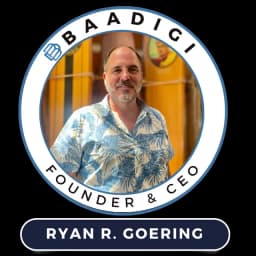
Ryan Goering
CEO & Founder, BaaDigi
U.S. military veteran and digital marketing strategist who built BaaDigi to help contractors generate predictable leads and revenue. 15+ years in SEO, PPC, and AI-powered marketing automation.
Frequently Asked Questions
Do contractors need every marketing channel?▼
No. Pick the channels that match the work you sell and the inbox coverage you actually have. A second channel only helps once the first one reaches an accountable person.
What is the difference between multichannel and omnichannel?▼
Multichannel means you are on more than one channel. Omnichannel means the records and the customer experience are connected across them: a form, a call and a text from one household land on one contact record with one owner. The label on the software matters less than the handoff. In our tracker, 492 inbound conversations across six client accounts (Jun–Sep 2026) got a logged reply 58.7% of the time; the misses were not a channel problem, they were an ownership problem. Define who owns the next action before you buy a tool described with either word, and test it with a real inquiry that arrives twice through two routes.
How can I prevent duplicate lead reporting?▼
Give every inquiry one identifier, keep the original events, and write down how duplicates get reviewed. Count customers from the CRM outcome record, and keep each platform’s credited conversions in a separate view. When two records might be the same person, flag them for a human instead of merging or deleting.
How should a channel change be judged?▼
Compare qualified inquiries, signed customers, full acquisition cost and crew capacity over the same window before and after. Note seasonality, offer changes and open estimates. Ask whether the channel added demand or just took credit for people who already knew you; ordinary reports often cannot prove that, so say so rather than crediting every gain to the newest campaign.
Popular Contractor Marketing Guides
Contractor Marketing by City
We serve contractors nationwide — based in Orange County, CA
Explore More Topics
Ready to Get More Leads?
Get a free marketing audit for your contracting business. We'll show you exactly where you're losing leads.
Get Your Free AuditRelated Articles
Auto Detailing Marketing: What Should You Do First?
A practical detailing marketing plan with clear priorities, linked guides and measurable next steps.
Which Landscaping Marketing Channels Are Worth It?
Compare landscaping search, social, mail, referrals and marketplaces by purpose, cost and measurement.
How Should Plumbers Balance Leads and Plumbing Memberships?
Coordinate plumbing acquisition, membership delivery and reactivation without double-counting customers or assuming repeat work is free.