How Can You Increase Restaurant Sales?
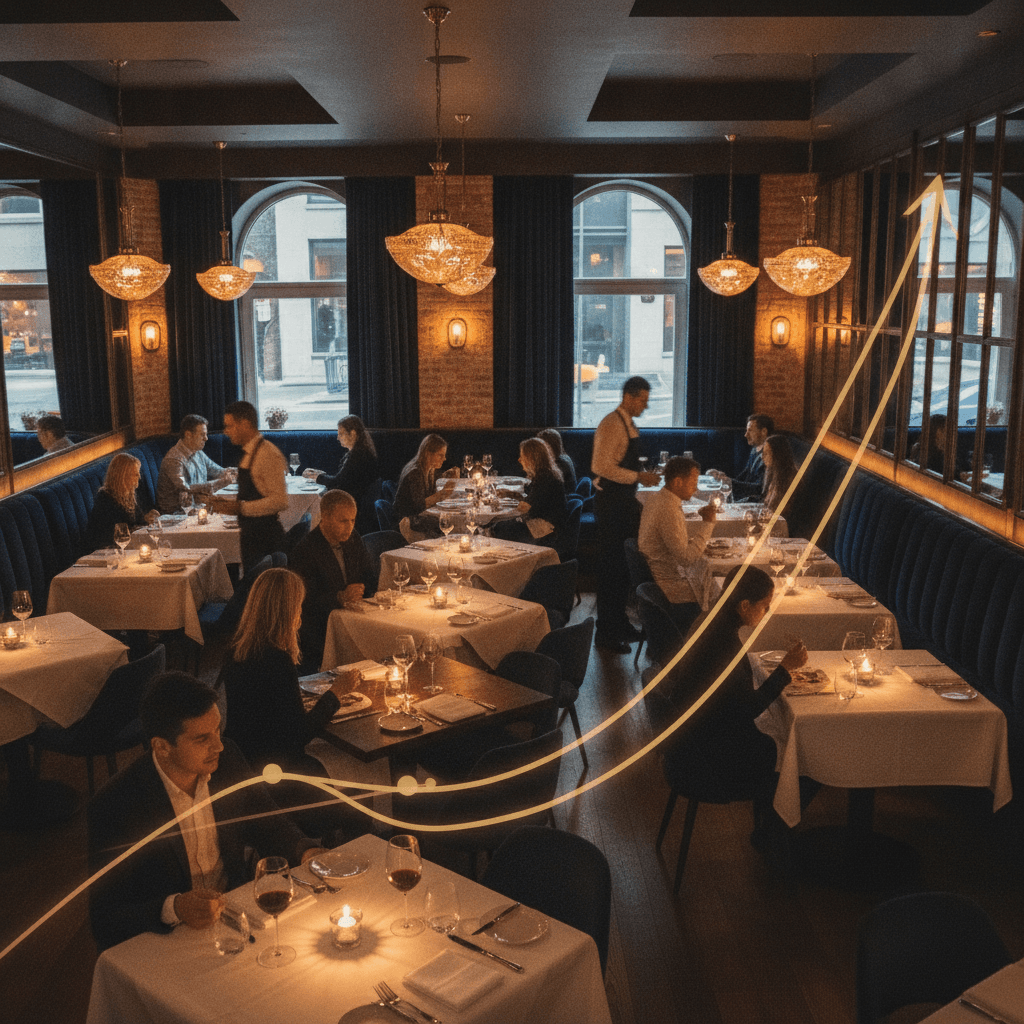
How can a restaurant increase sales responsibly?
To increase restaurant sales, find the constraint first: too few visits, a lower average check, weak return visits or empty seats on one shift. Then fix the guest path for that constraint and measure contribution after costs. Discovery is measurable: across 39 client Google Business Profiles BaaDigi tracks (Sep 2025–Aug 2026), profiles produced 10,233 calls and 30,599 direction requests, but a direction request is not a seated cover.
Can an AI agent actually use your website?
AI agents are starting to visit sites on a customer's behalf — comparing companies and requesting quotes. We run the same agentic browsing checks Google built into Chrome and show you what an agent hits when it lands on your site. No email to run it.
By Ryan Goering, founder and CEO of BaaDigi. We sell restaurant marketing, so the framework is ours; the profile figures are aggregates from our own client accounts.
Last updated: September 2026.
For dine-in reporting, sales can be described as covers multiplied by average spend per cover for the same period and revenue definition. Repeat frequency and capacity use help explain those covers; they are not additional independent multipliers to apply to the same total. Keep delivery, takeaway and events separate when their costs differ.
Which problem does the evidence point to?
| Observation | Investigate | A practical first check |
|---|---|---|
| Few visits across service periods | Discovery, offer, location information and booking access | Find the menu and complete the intended contact path on a phone |
| Similar covers but lower sales | Menu mix, prices, discounts and average spend | Compare equivalent service periods in the point-of-sale records |
| Weekends busy, another shift quiet | Demand and usable capacity for that shift | Define an occasion the kitchen and room can serve profitably |
| Few identifiable return visits | Guest experience, recognition and relevant communication | Check the completeness of the guest history before calling it low retention |
These observations are starting questions, not diagnoses that apply automatically. Weather, closures, pricing, menu changes and local events can affect the comparison.
What friction can you remove now?
Check current hours, menu prices, reservation links and ordering destinations. Confirm the venue and event are correct, and that a guest can reach the final confirmation. Use clearly identified tests without blocking real inventory or creating unannounced reservations.
Maintain a readable menu with actual dishes and prices. Keep a PDF when useful, but offer information that works well on a phone. The local SEO guide explains the visibility work; fixing a broken booking path removes an obstacle without guaranteeing a particular sales increase.
The profile is where that check pays off. Across 39 client Google Business Profiles BaaDigi tracks across trades (Sep 2025–Aug 2026), Google Search produced 649,723 impressions and Maps 472,863, turning into 10,233 calls, 44,699 website clicks and 30,599 direction requests; the median profile got 1.3 calls a month. A diner who finds wrong hours on that profile never reaches your booking page.
How can you evaluate average-spend changes?
Review what guests actually order and the contribution each item leaves after relevant costs. Train staff to explain suitable options accurately rather than pressure guests. Test a menu description, pairing or format when it helps the dining experience and the kitchen can deliver it.
Record the price and item mix before and after. A larger average check may reflect fewer low-spend guests rather than a successful recommendation. Removing items or changing layout can have operational effects, so check service speed, waste and feedback alongside revenue.
Is your own website costing you leads?
Free scan — speed, mobile, local visibility, and lead capture. Results in about 30 seconds.
What could fill a quieter shift?
Consider a real occasion: an event, group booking, private dining offer or menu format suited to the available room and kitchen. Define the service period and costs before promoting it. Extra diners still consume ingredients, staff time, payment processing and possibly additional labor; spare seats are not costless capacity.
Measure whether the activity creates additional contribution or mainly moves existing guests from another shift. Keep the offer terms accurate and track the intended service period. A public offer and a subscriber invitation can both discount a visit; audience selection does not change the arithmetic.
Are discounts always the wrong answer?
No. Evaluate the actual offer, the people receiving it and the contribution left after redemption. A price reduction may attract an additional visit or simply reduce revenue from someone who would have paid the regular price. An extra course or complimentary item also has a cost and can affect service capacity.
Set a limit and review the outcome. Avoid calling added value free or assuming it always protects margin better than a discount. Use the same cost discipline for every promotion.
How can you encourage relevant return visits?
Deliver the promised experience first. Offer guests an appropriate way to hear about actual menu changes or events, and maintain their preferences. The restaurant email guide covers list handling and measurement. A past booking does not prove a person wants every promotional message.
Compare guest history carefully: a missing identified visit may be a walk-in rather than a lost customer. A more frequent guest may also have a different spending pattern. Use observed records instead of multiplying a hypothetical visit schedule into a claimed lifetime value.
How do you know whether the work helped?
Choose the period, service, revenue definition and relevant costs before comparing results. Track covers, average spend, cancellations, offer redemption and contribution. Link visibility and booking activity where possible but do not relabel menu views or direction requests as seated guests.
The restaurant marketing plan connects the guest path. Google’s local ranking guidance explains discovery factors, not a promise that profile work causes a particular number of covers.
For scale, the median rate across those 39 profiles was 18.4 calls per 1,000 impressions, but a few large profiles dominate the totals, so compare your venue to its own baseline rather than to an average.
Editorial correction: Earlier versions overstated zero-cost demand, discount effects and sales causation. A previously quoted client search percentage is omitted because its underlying period and source export were not available in this review.
Free website audit — see what's costing you leads
No email required. Takes 2 minutes. Completely free.
Frequently Asked Questions
Should I multiply covers, spending, frequency and capacity?▼
No. Covers times average spend per cover describes dine-in sales for a period. Frequency and capacity explain the cover count; multiplying them in again double-counts.
Is filling empty tables almost pure profit?▼
No. Every extra guest still consumes ingredients, service time, payment processing and sometimes an extra shift of labor, and a promotion can simply move Saturday's guests to Tuesday. Before you call a quiet shift free capacity, price the incremental cost of serving it and check whether the offer brings genuinely new visits or discounts people who would have paid full price. Run the offer for a defined period, compare contribution after redemption against the same shift before the offer, and keep closures, weather and menu changes in the notes so you do not credit the promotion for a busy week it did not cause.
Can I improve sales without discounting?▼
Yes, by removing booking friction, clarifying the menu, improving the experience or creating an occasion people value. None of those guarantees a lift, so pick one constraint and measure the outcome and the cost. A complimentary course is still a cost, not a free alternative to a discount.
Popular Contractor Marketing Guides
Roofing SEO by City
We serve contractors nationwide — based in Orange County, CA
Explore More Topics
Ready to Get More Leads?
Get a free marketing audit for your contracting business. We'll show you exactly where you're losing leads.
Get Your Free AuditRelated Articles
Is Restaurant Email Marketing Worth It?
Build useful restaurant email around clear signup expectations, accurate offers, working booking links and measurable dining outcomes.
What Should Restaurant Local SEO Fix First?
A restaurant local-search checklist for truthful profiles, readable menus, booking links, reviews, structured data and measurable outcomes.
What Should Restaurant Marketing Fix First?
Fix accurate menus, hours and booking paths before adding restaurant campaigns. Assign update ownership and separate visibility from seated guests.