What Do Perplexity Citations Really Prove?

How do you evaluate Perplexity citations?
Perplexity citations prove one thing: the linked page supported a sentence in the answer. They do not prove a recommendation or a lead. In BaaDigi's 511 Perplexity answers (Aug 18–31 2026), reddit.com was cited 382 times, linkedin.com 246 and baadigi.com 199, and in 254 free audits the business was named for its own service-and-city query only 23.2% of the time. Open each source and check what it supports.
A link to your article, a mention of your company and a recommendation to hire your company are different observations. Record them separately before deciding whether your business has a discovery problem or an information problem.
For a local business, the practical work is to make important information accurate, accessible and useful, then inspect a repeatable set of relevant questions. Do not assume that a page with a numbered citation is correct, that your absence identifies a specific ranking weakness, or that allowing a crawler guarantees selection. This guide concentrates on Perplexity source review and the actions supported by the evidence, rather than assigning invented weights to headings, reviews or domain metrics.
Can an AI agent actually use your website?
AI agents are starting to visit sites on a customer's behalf — comparing companies and requesting quotes. We run the same agentic browsing checks Google built into Chrome and show you what an agent hits when it lands on your site. No email to run it.
By Ryan Goering, founder and CEO of BaaDigi, a contractor marketing agency.
Last updated: September 2026. The procedure below is our editorial recommendation; we do not claim access to Perplexity’s private source-selection formula.
What does Perplexity document about its answers?
Perplexity describes searching the web and returning cited answers. Use those links as a starting point for verification. The documentation does not provide a contractor-specific ranking recipe or establish that one review platform always receives priority.
Record the product or mode you used. Keep a fresh question separate from a follow-up that depends on an earlier conversation. When a result is important, save the complete answer and the source URLs rather than only the sentence containing your name.
How do you check whether a citation supports the answer?
Work from the claim to the source. Locate the relevant passage, check the business identity and note whether the information is current enough for the decision. A broadly relevant page is not necessarily evidence for every detail beside its citation.
| Answer claim | Source check | Possible finding |
|---|---|---|
| A company serves a city | Does the business describe that real service area? | Supported, contradicted or not established. |
| A service has a stated price | Does the source give that price with matching scope and conditions? | Current offer, obsolete figure or unsupported amount. |
| A company is available urgently | Does the source verify current availability or merely list contact hours? | Availability still requires direct confirmation. |
| A company is recommended | Is the citation a business page, directory, article or unrelated source? | Record what the source actually establishes. |
Illustrative example: a roofing cost article may support a general comparison method but not the price of repairing a particular roof. Marking that distinction protects the buyer and keeps your reporting honest. This is an example of source analysis, not a claimed platform error we measured.
What does Perplexity cite for contractor questions?
We ran 88 contractor-marketing prompts through Perplexity three times a week for two weeks and kept 511 answers with every cited URL (BaaDigi client data, Aug 18–31 2026). Reddit was cited 382 times, linkedin.com 246, baadigi.com 199 and youtube.com 71. Google AI Overviews, run on the same prompts, cited google.com 310 times and reddit.com only 139 times, so the engines do not share one source list. The full study publishes the table. For a contractor, the practical reading is that Perplexity leans on pages where a real person answers a specific question, which is the format the LLM SEO guide describes.
The audit side is less flattering. Of 254 free BaaDigi audits that included a Perplexity check (Mar–Sep 2026), 59 businesses, 23.2%, were named for their own service-and-city query, and the median business had 3 competitors named ahead of it. Those are self-selected prospects, not a random sample, but they show how much room there is.
Is your own website costing you leads?
Free scan — speed, mobile, local visibility, and lead capture. Results in about 30 seconds.
How do you create a useful prompt sample?
Use a small set of questions tied to real services and buying decisions. Include a discovery question, a comparison question and a business-fact question. Add city names where geography matters. Do not invent a hundred near-duplicate questions just to produce a large visibility report.
- State the exact question and why it matters to the business.
- Record date, product context and whether the question starts a new conversation.
- Save the answer and all relevant source links.
- Label brand mentions, direct website citations and recommendations separately.
- Record incorrect or unsupported details without guessing their cause.
- Repeat the same baseline later and document any changed test conditions.
The AI search visibility check can help you begin observing results. If a tool gives only a score, ask how to inspect the actual answers behind it. A report should remain understandable after the person who ran the test leaves the room.
Which crawler access is relevant?
Perplexity documents PerplexityBot for search, separately from its user-triggered fetcher, and says these are not foundation-model training crawlers. Have the site administrator inspect access using that documentation rather than assumptions about other providers.
A public page that loads in your browser may still encounter different infrastructure behavior for another request. Ask for evidence from the affected path and relevant settings. Do not disable security broadly because an agency wants a green check mark.
Use the crawler-control guide for the distinction between public crawling and private access protection. A successful fetch is a technical observation; a citation is a separate search observation.
What should a citation-review record look like?
Give each important claim its own row. Record the answer passage, cited URL, supporting source passage, source date where available and your finding: supported, contradicted or not established. Add the correct business fact and a proposed action only when the evidence supports one.
If a cited page is unavailable, record that limit instead of deciding the claim must be false. If the page supports only part of the statement, retain that narrower finding. Use the cross-platform comparison guide when reporting these observations alongside other search products, with the same evidence standards.
What improvements follow from the source review?
Prioritize clear information defects. Correct an obsolete phone number, clarify service scope or replace a price that the business no longer honors. If your own page lacks important decision information, improve the page before attempting to produce more mentions elsewhere.
When a third-party source is wrong, request a factual correction from its publisher. Do not disguise paid placement as independent editorial coverage. If the source is accurate but your business was not selected, record that limitation instead of manufacturing a defect.
Our SEO work can help with service-page structure and discoverability. It should leave the business with better public information even when no immediate citation change appears. That is a more defensible scope than promising a particular answer on a date.
How should you report business value?
Keep the evidence chain visible. A citation can lead to a visit; a visit may lead to an inquiry; an inquiry may be qualified. Record the stages your actual data can support and identify the ones it cannot connect.
Compare the same questions and dates when reviewing appearances. Compare consistent cost and qualification definitions when reviewing leads. Do not label a saved answer as revenue or a source link as a booked project. If a source changes, preserve the earlier version of your observation so the difference can be explained.
BaaDigi’s AI Visibility Audit is $497 for one business and one market. A useful diagnosis should show what was observed, what can be repaired and what remains uncertain. There is no citation entitlement attached to the purchase.
Free · No signup
Test your new AI receptionist — free
Call the number below and talk to it live. It answers 24/7, qualifies the job, and books the estimate — the same AI that can answer your phones.
Free website audit — see what's costing you leads
No email required. Takes 2 minutes. Completely free.
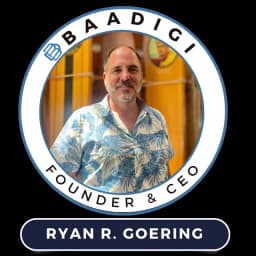
Ryan Goering
CEO & Founder, BaaDigi
U.S. military veteran and digital marketing strategist who built BaaDigi to help contractors generate predictable leads and revenue. 15+ years in SEO, PPC, and AI-powered marketing automation.
Frequently Asked Questions
Is a Perplexity citation the same as a business recommendation?▼
No. A linked page can supply background without the answer telling anyone to hire you. Record context, URL and business name separately; track visits and inquiries later.
What should I do when a source supports only part of an answer?▼
Record which statement the page supports and which details remain unverified. Check the other cited sources before calling the whole answer wrong. A service page can establish coverage without establishing current availability.
Should I rewrite a page to imitate the source Perplexity selected?▼
Use the source to understand the question being asked, not as copy to reproduce. In our August 2026 sample Perplexity cited reddit.com 382 times, and nobody should rewrite a service page to read like a Reddit thread. What those threads have in common is a direct answer to a specific question, usually with a number in it. Check whether your own page leaves that buyer question unanswered and whether you have real facts, prices or project detail to fill it. Keep your actual service scope and evidence. Matching headings or wording does not tell you why the other page was selected, so imitation is not a diagnosis.
Can a citation report justify increasing the marketing budget?▼
It can inform the decision but not carry it alone. Compare reported appearances with identifiable visits, qualified inquiries, costs and capacity, and read the underlying answers rather than a score. Keep the next investment proportionate to what you can verify.
Part of the AI Search series
Start here → AI Search Optimization for Contractors: the complete guidePopular Contractor Marketing Guides
Roofing SEO by City
We serve contractors nationwide — based in Orange County, CA
Explore More Topics
Ready to Get More Leads?
Get a free marketing audit for your contracting business. We'll show you exactly where you're losing leads.
Get Your Free AuditRelated Articles
We Audited 10 Orange County Roofing Websites. What Broke?
Ten real roofing company websites in Orange County, two passes of our AI audit prompt, no guessing. Here is what failed most often, how bad it was, and what to fix first if your site looks like these.
What Does a Local SEO Audit Actually Check?
A website audit misses half the picture. Pass three of our AI audit prompt leaves your site and checks the map pack, your listings, your reviews, and whether ChatGPT names you. Here is what it finds.
SEO for Contractors: Why Don't Your Service Pages Rank?
Most contractor service pages fail for the same three reasons. Pass two of our AI audit prompt reads every page on your site and finds them. Here is what it checks and what we see on real sites.