How Do Contractors Get Social Media Leads?
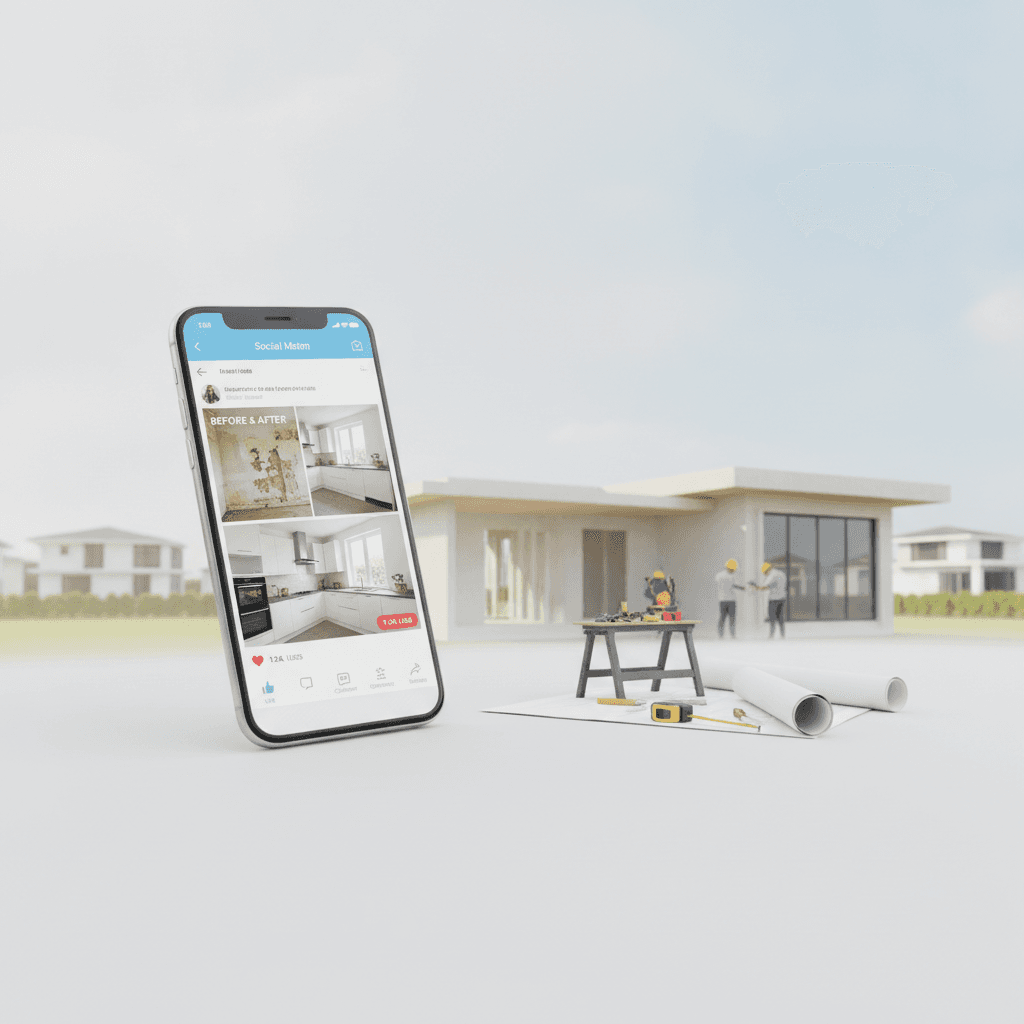
How can organic social media generate leads?
Social media leads come from posts that answer a real customer question, show work you can prove, and end with one clear contact route, plus someone who actually answers the inbox. That last part is where contractors slip: in BaaDigi’s client tracker, Facebook messages got a logged reply in 46 of 51 conversations and Instagram in 11 of 19 (Jun–Sep 2026). Count inquiries and jobs, not likes.
Can an AI agent actually use your website?
AI agents are starting to visit sites on a customer's behalf — comparing companies and requesting quotes. We run the same agentic browsing checks Google built into Chrome and show you what an agent hits when it lands on your site. No email to run it.
By Ryan Goering, founder and CEO of BaaDigi. BaaDigi sells contractor marketing services.
Last updated: September 2026.
This guide is for the ongoing content and conversations on your business profiles. The contractor Facebook advertising guide covers paid campaigns. Keeping those scopes separate makes it easier to see what your team’s content work actually contributes.
What should the profile make clear?
State the services you provide, the area you actually cover and the best contact route. Link to a relevant working page, not a broken promotion or a generic destination that hides the offer. Keep hours and response expectations honest; a profile message does not mean an emergency technician is on the way.
Review the profile as a customer: can you identify the business, understand the work and ask a useful question without hunting through old posts? If the answer is no, fix that before increasing the posting schedule.
Which posts help someone make a decision?
| Post | Useful content | Appropriate next step |
|---|---|---|
| A completed project | Real scope, photos and constraints you can substantiate | Read the related service or project page |
| A common customer question | A clear answer with limits and relevant sources | Ask about the customer’s own situation |
| How your process works | What happens from inquiry to assessment and proposal | Request the appropriate appointment |
| A real offer | Confirmed price, inclusions, exclusions and dates | Use the stated contact or booking route |
These are editorial ideas, not ranked formats with promised conversion rates. Use material you have permission to publish. Do not label stock images as your completed work or turn a customer’s private message into a testimonial without permission.
How do you turn a topic into a useful post?
- Choose one question your office actually hears.
- Answer it directly in ordinary language.
- Add the evidence needed to understand the answer.
- State any qualification that would change the advice.
- Link to the next relevant page or explain how to ask about a project.
Publish real prices when available and explain the scope. If the price depends on an assessment, describe the inputs needed rather than inventing a starting figure. Avoid padding every post with a sales pitch; the next step should follow from the question being answered.
Is your own website costing you leads?
Free scan — speed, mobile, local visibility, and lead capture. Results in about 30 seconds.
What should happen when someone comments or messages?
Assign an inbox owner and a backup. Answer general questions publicly where appropriate, then move private project details into the business’s normal intake process. Do not ask someone to post their home address or financial information in a public thread.
Confirm the service need, location and next action. Record a genuine inquiry once, even if it appears as a comment, message and form submission. Do not add every follower or commenter to a promotional list. Keep follow-up tied to the actual request and the permission you have.
Fast is not the same as answered. In our client tracker (Jun 18 to Sep 21, 2026) the median logged first reply on Facebook was 0.3 minutes and on Instagram 0.1 minutes. That is auto-responder speed, not a person reading the request. The auto-reply buys time; it does not answer the question. Log the human follow-up as its own event, and use the speed to lead guide to see what the whole queue looks like.
Should you use downloads, events or contests?
Only when they solve a real audience need and the business can deliver them. A checklist that helps someone prepare for an estimate may be more useful than a generic ebook. Explain what information you collect and what communication follows. A download or event registration is not automatically a qualified project.
Meta’s 2023 guide describes paid lead-generation formats, including instant forms. That is a separate mechanism from a normal organic post. Check current platform rules and options before using a promotion rather than assuming all engagement can be collected or retargeted.
How do you decide what to keep publishing?
Record the topic, destination, staff time and resulting inquiries when observable. Ask whether the content answered a useful question and whether the office handled the response. Views and reactions can help describe reach or interest, but they do not establish acquired customers.
Use the results-verification framework to separate observations from forecasts, and the connected-channel guide when a person returns through search or another route. Keep unknown sources visible. Adjust the workload to what the team can sustain instead of promising a fixed posting frequency will fill the calendar.
What does BaaDigi marketing help cost?
The Stability Engine is $497 per month plus $995 setup for the website, business profile, content, reporting and Google Ads management, with up to $1,600 per month of ad spend paid to Google on top. It does not include paid Meta campaigns, so read the written scope before assuming social ads are covered.
Free website audit — see what's costing you leads
No email required. Takes 2 minutes. Completely free.
Ryan Goering
CEO & Founder, BaaDigi
U.S. military veteran and digital marketing strategist who built BaaDigi to help contractors generate predictable leads and revenue. 15+ years in SEO, PPC, and AI-powered marketing automation.
Frequently Asked Questions
How often should a contractor post on social media?▼
As often as you can post something true and still answer every message the same day. One useful post a week beats five that nobody replies to.
Do likes and followers count as leads?▼
No. A like is a reaction; a lead is a person asking for work you do in an area you serve. Keep reactions, messages, qualified inquiries, appointments and customers as separate columns. Our client tracker shows why the distinction matters: Facebook first-contact conversations got a logged reply in 46 of 51 cases and Instagram in 11 of 19 (Jun–Sep 2026), and the fast medians on both were auto-responders rather than a person. A page can look busy while the actual requests sit unanswered. Report what you can see, and do not assign unknown customers to social content because the post had reach that week.
Should I gate every useful resource behind a form?▼
Only when you can explain why you need the contact details and what happens next. A useful answer works better as an open page; a consultation request needs a contact route. A download is not permission to treat someone as a ready-to-buy project.
Popular Contractor Marketing Guides
Roofing SEO by City
We serve contractors nationwide — based in Orange County, CA
Explore More Topics
Ready to Get More Leads?
Get a free marketing audit for your contracting business. We'll show you exactly where you're losing leads.
Get Your Free AuditRelated Articles
Nextdoor vs Facebook for Local Services
Facebook has vastly more reach. Nextdoor has vastly better fit. For home services the cheaper click is not always on the platform you would guess.
Is Nextdoor Worth It for Local Service Businesses?
77% of Nextdoor users are homeowners and clicks run $2.50-$3.50 against $8-$15 on Google. For home services it is one of the better-fitting paid channels available.